
The Galápagos has long sat on both my partner’s and my bucket list — not simply as a destination, but as a place of profound significance and a degree of mysticism in our eyes. To stand where Charles Darwin first began to understand evolution is one thing. To witness it still unfolding, in real time, is something else entirely including protection and repopulating of the Giant Tortoises to the challenge of invasive species such as rats and goats.
What struck us most was not just the extraordinary wildlife, but their complete lack of fear. Sea lions playing you while you were snorkelling, Iguanas unmoved by your presence. Birds continuing their rituals, indifferent to the human observer. It is a rare privilege — and a powerful reminder of how wildlife should exist, undisturbed. But this fragile balance does not happen by accident.
The Galápagos is one of the most protected ecosystems in the world, yet it remains under constant pressure — from tourism, climate change, and the cumulative impact of human presence. What appears untouched is, in reality, the result of disciplined conservation, strong governance, and long-term commitment.
Through the work by organisations such as the Galapagos National Park Directorate, Charles Darwin Foundation and in Australia, the Foundation for National Parks & Wildlife (FNPW). I have come to appreciate that protecting these environments requires more than admiration — it requires structure, funding, and accountability. That is why I have joined the Board of FNPW, actions speak loader then words.
This collection of photographs is not just about capturing beauty. It is about bearing witness. If these images do anything, I hope they reinforce a simple truth: conservation is not optional. It is a responsibility — to preserve not just what we admire, but what must endure long after we are gone. I encourage everyone, help if you can. Volunteer, make a donation, lobby your government and join some of these great conservation organisations.
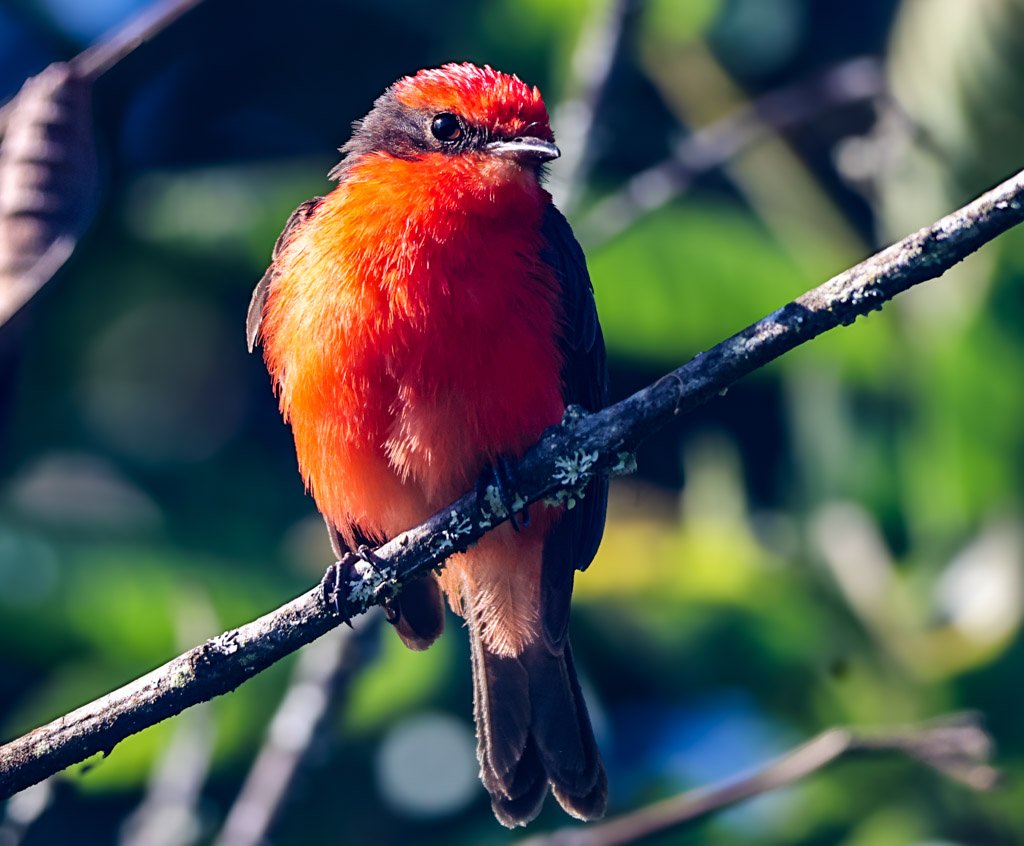
Vermilion Flycatcher (male) Fearless and brilliant, this Galápagos icon is declining on some islands due to invasive species such as rats and cats. Avian flu introduced by mosquitoes.
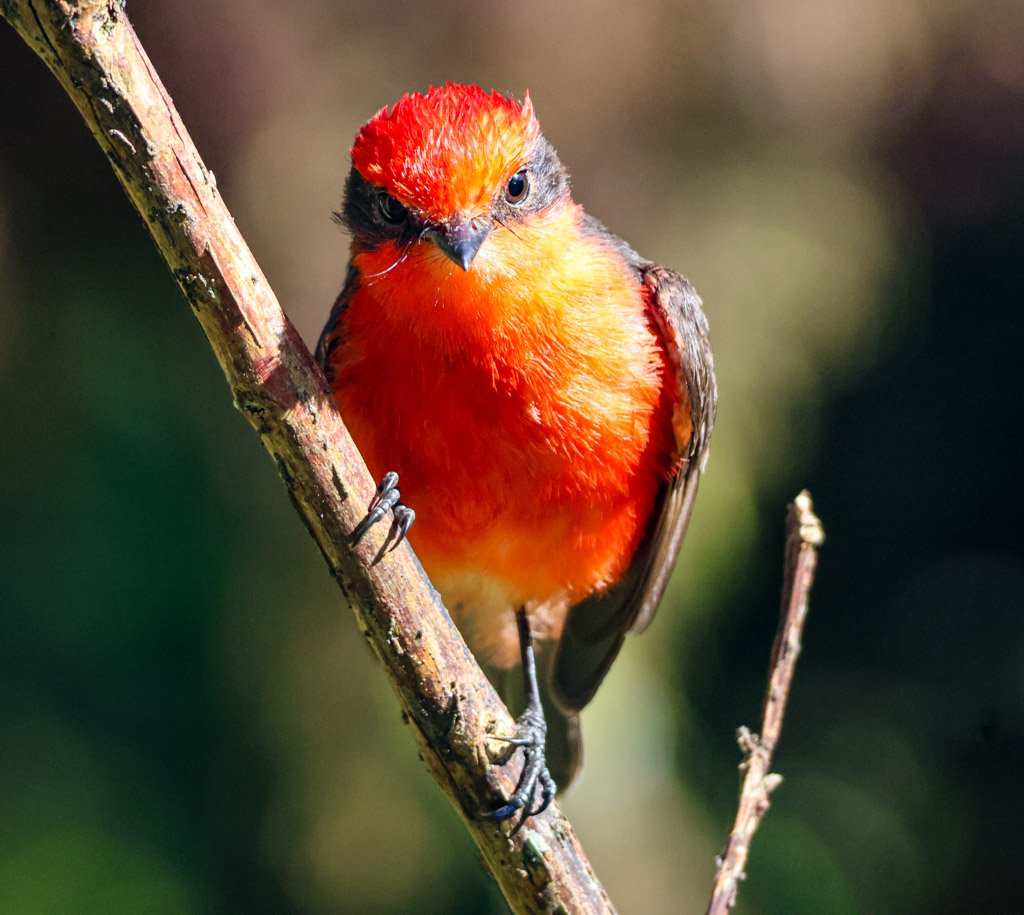
Vermilion Flycatcher (male). This vivid red comes from carotenoids in its diet. The male Vermilion Flycatcher has one of the more unusual courtship behaviours in the avian world — he catches an insect (often a butterfly), and rather than eating it, presents it to the female as a gift mid-flight during an elaborate aerial display.
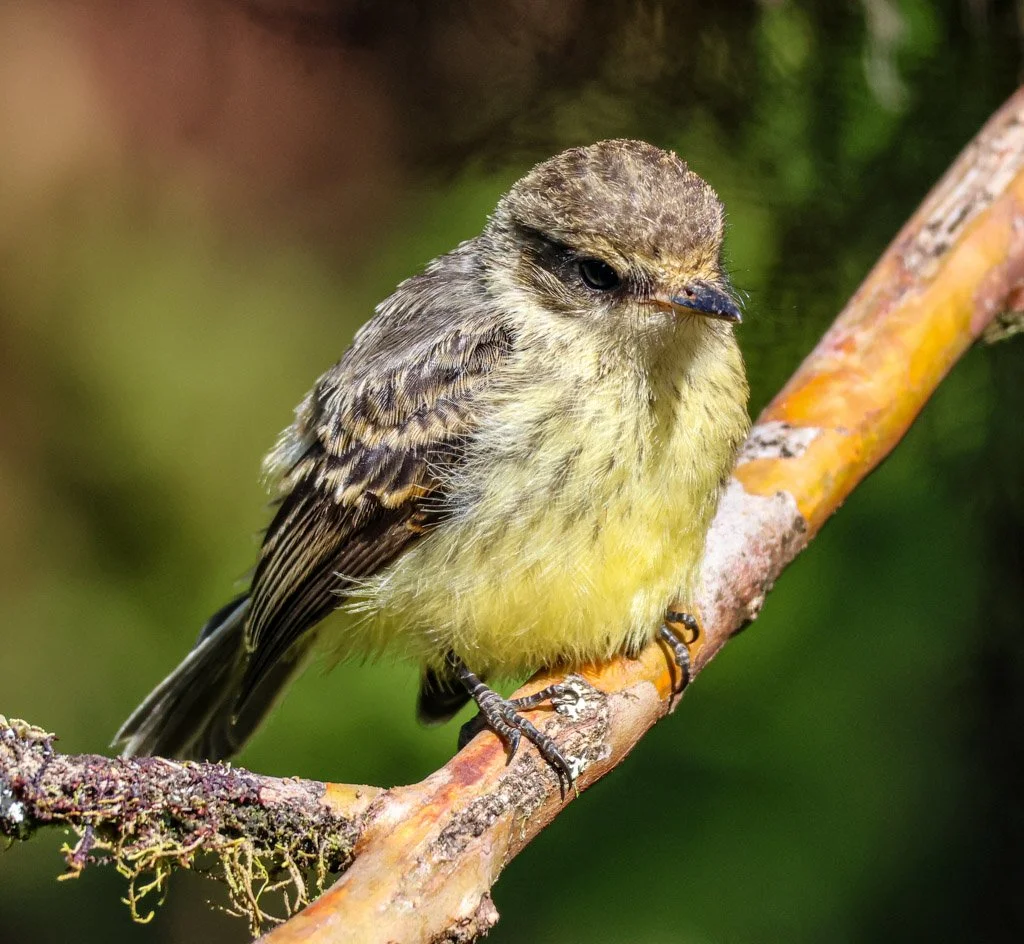
Vermilion Flycatcher (juvenile) Without the red yet, juveniles stay camouflaged—survival first in a landscape where introduced parasites threaten the next generation.
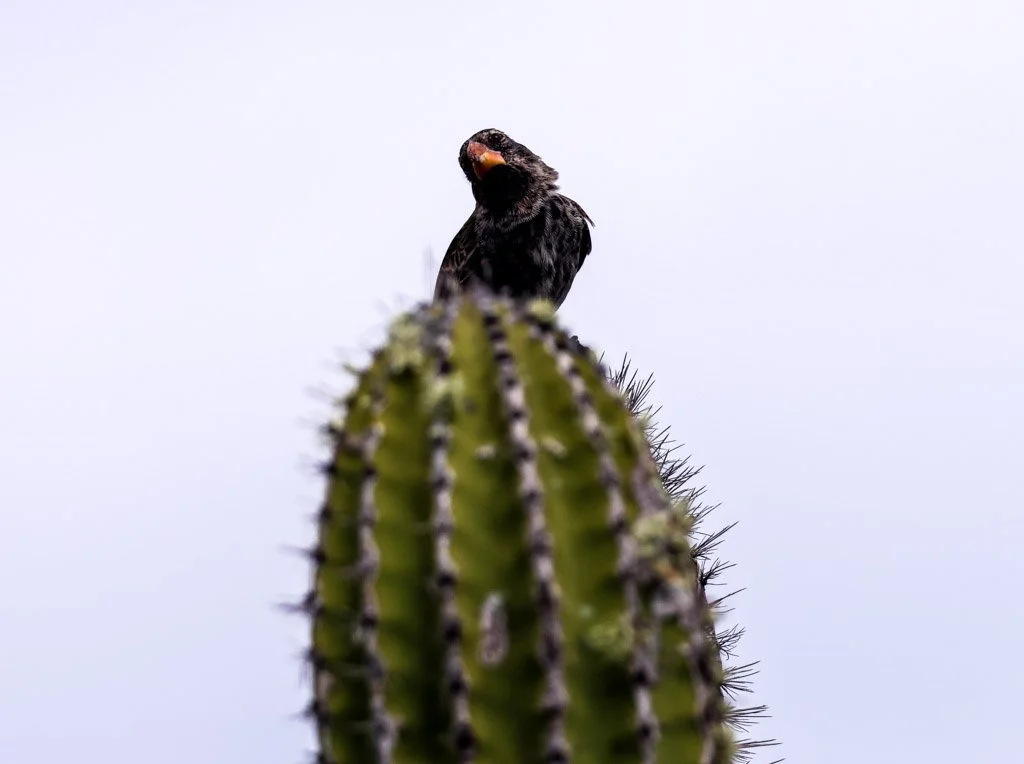
Cactus Ground Finch and the Opuntia cactus relationship is effectively obligate mutualism. The finch feeds on nectar, pollen, and fruit — and in doing so, acts as a primary pollinator and seed disperser for Opuntia across multiple islands. Remove the cactus, you lose the finch.
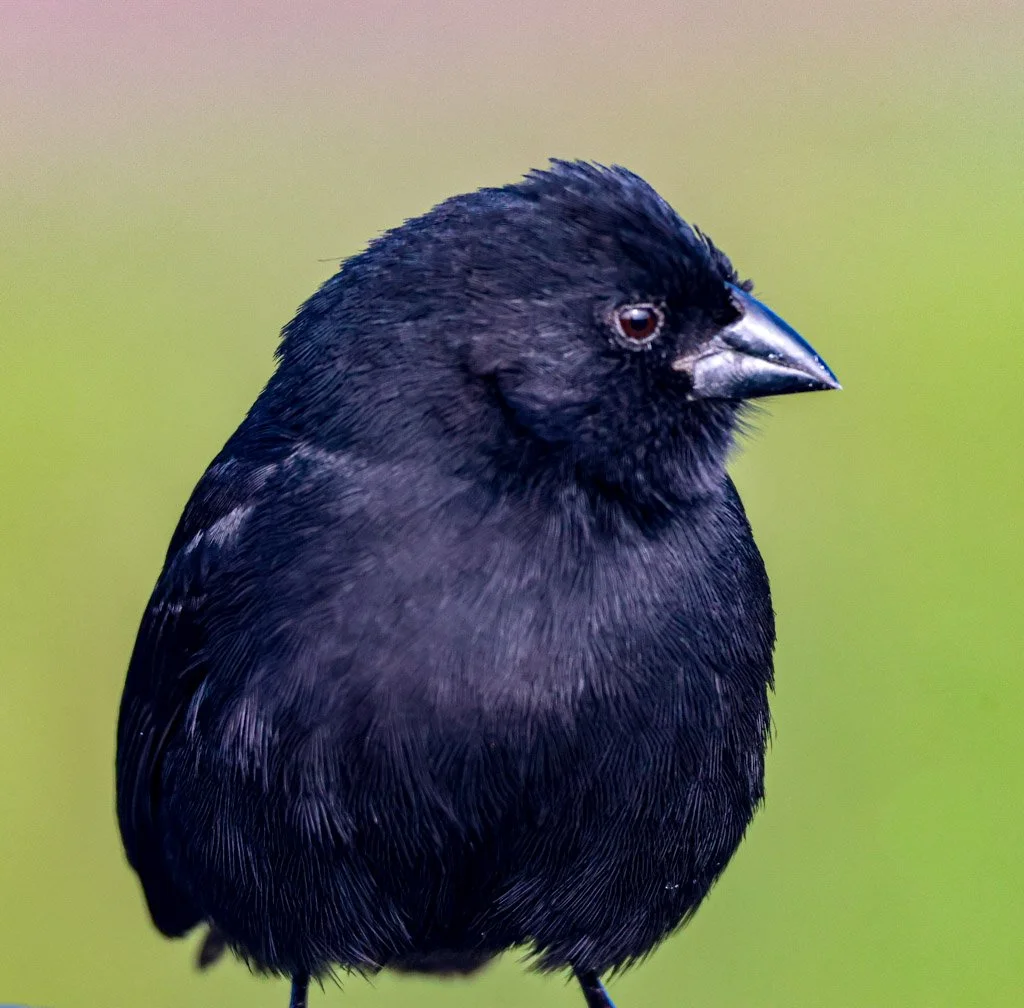
Small Ground Finch (Darwin’s Finch) In dry years, only birds with the strongest beaks survive—evolution here can shift in a single season.
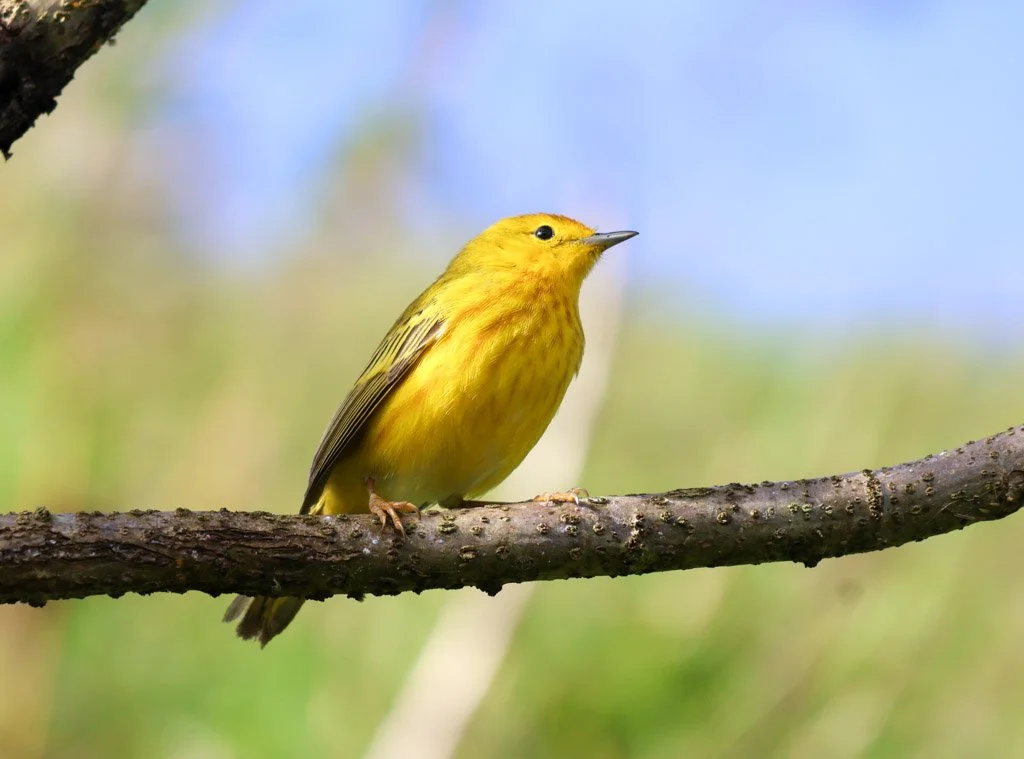
Yellow Warbler. They play a key ecological role as insect population regulators, particularly in mangrove systems—helping maintain balance in one of the Galápagos’ most fragile habitats.
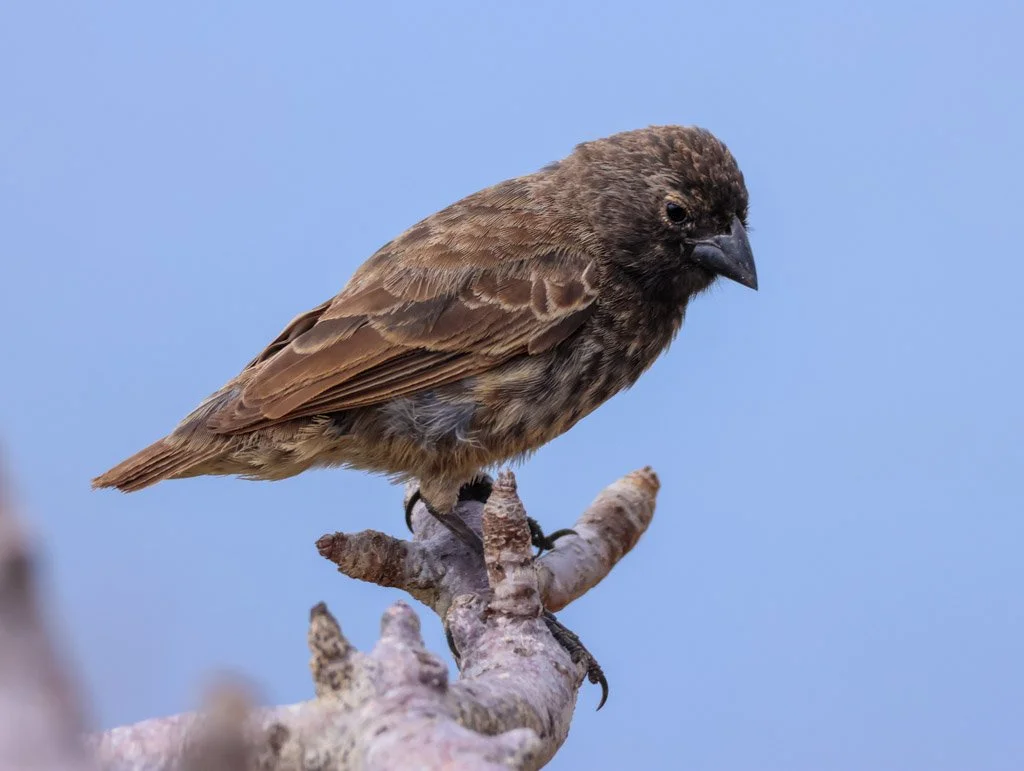
Small Ground Finch female. These finches are ground zero for avian vampire fly (Philornis downsi) — an introduced parasitic fly whose larvae burrow into nestlings' tissues and nasal passages, causing high chick mortality on some islands. It's now considered one of the most serious threats to Darwin's finch populations, with some nesting attempts seeing near-total chick loss.
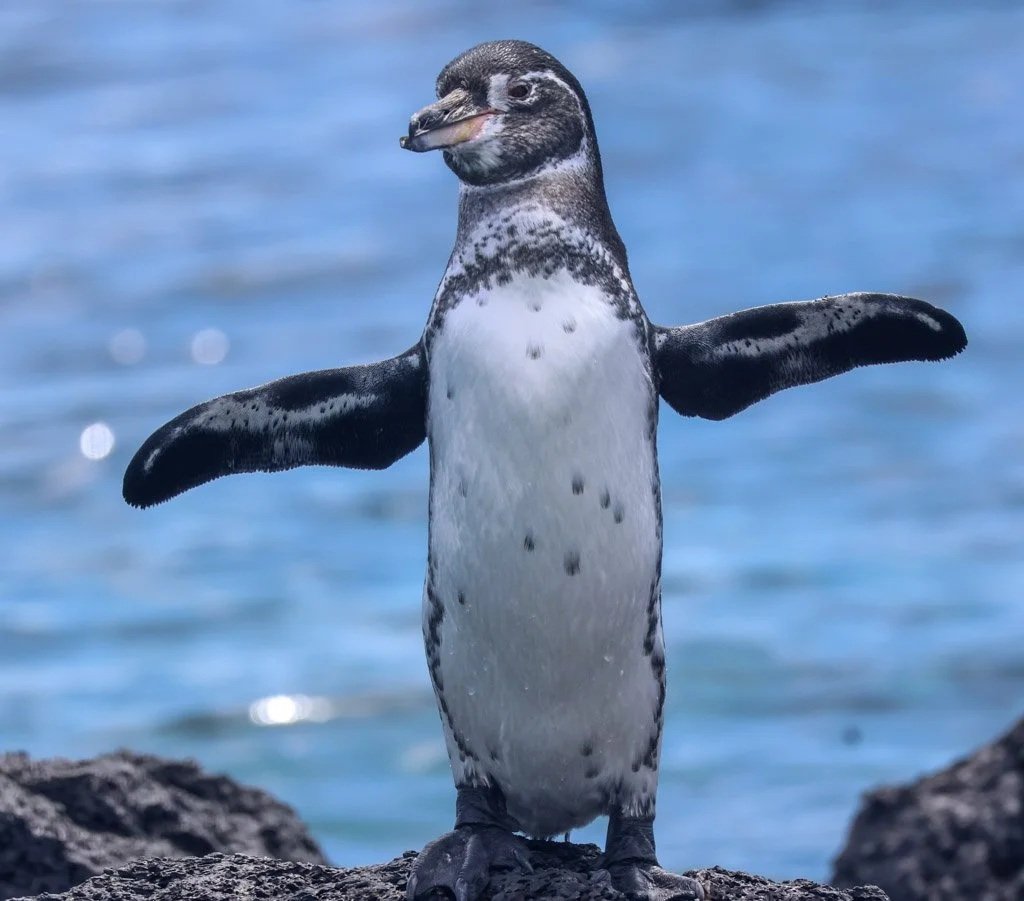
Galápagos Penguin The only penguin north of the equator—surviving here depends on cold ocean currents that are increasingly under threat. The behaviour worth knowing, they thermoregulate by holding their flippers away from their body and standing in shade or in water. One panting with wings spread, that's not aggression — that's a bird at its thermal limit.
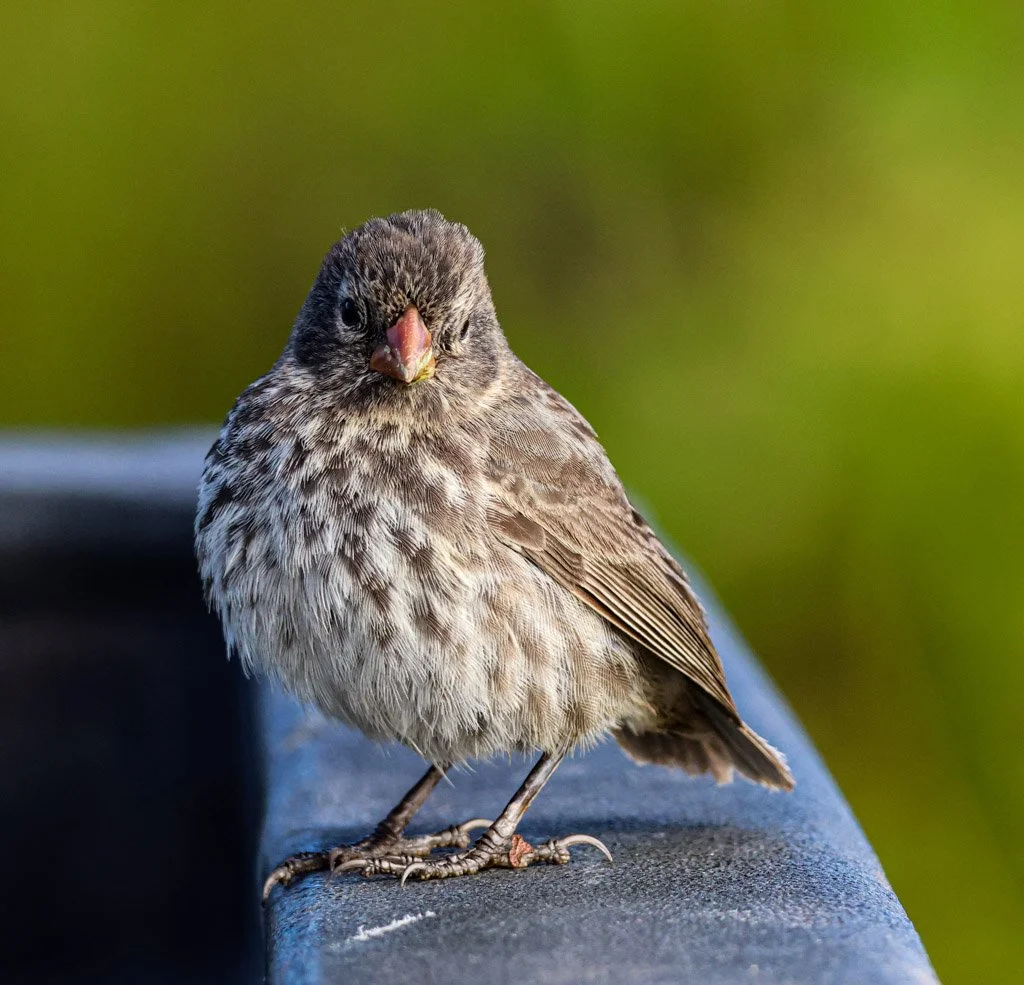
Small Ground Finch (Darwin’s Finch) Opportunistic and bold—they’ve learned to forage around people, adapting their behaviour as quickly as their beaks.
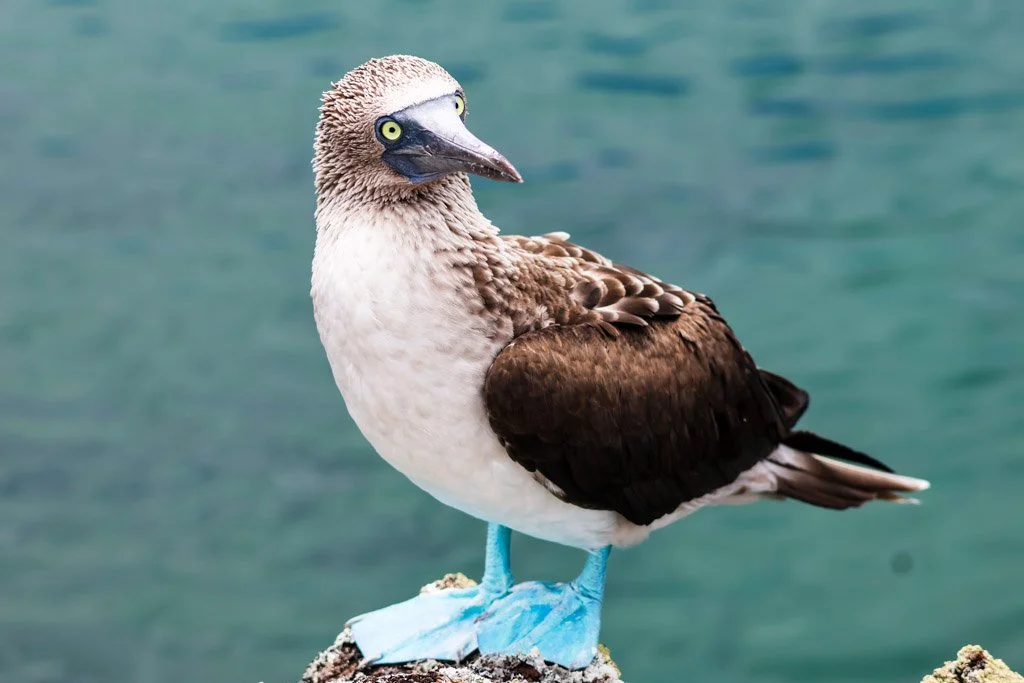
Blue-footed Booby Those vivid blue feet are a mating signal—the brighter the blue, the more attractive the bird. The foot colour of is derived directly from carotenoid pigments in fresh fish.
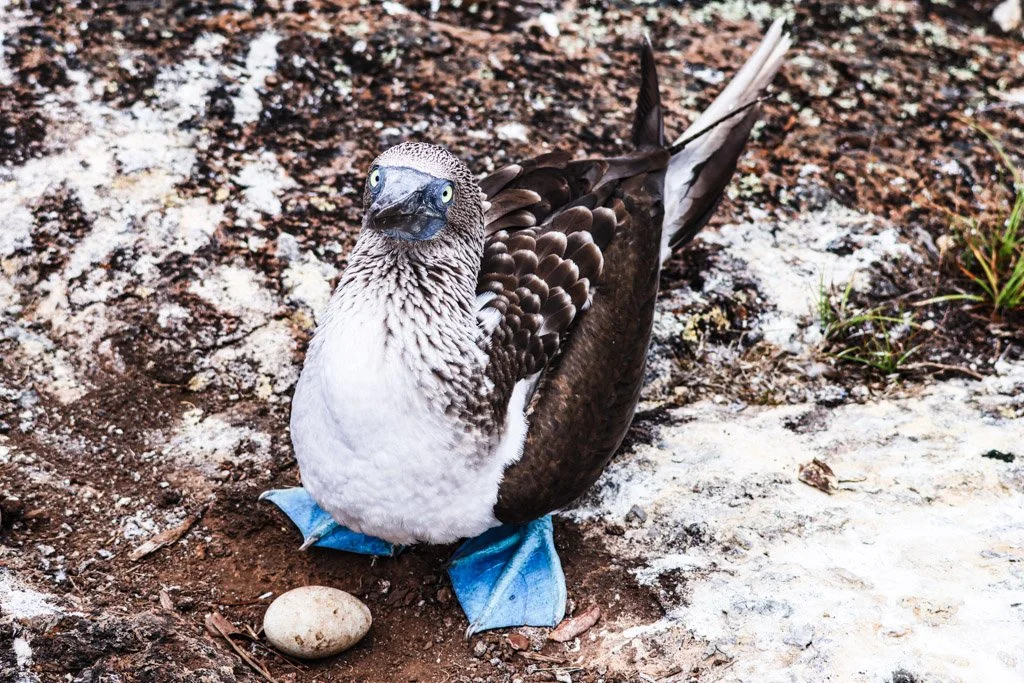
Blue-footed Booby They lay eggs on bare ground—no nest, just instinct and trust in a predator-free world. Unlike virtually every other bird, Blue-footed Boobies have no brood patch — no bare, vascularised skin on the belly for egg warming. Instead, they wrap their highly vascularised blue feet directly around the egg to transfer body heat.
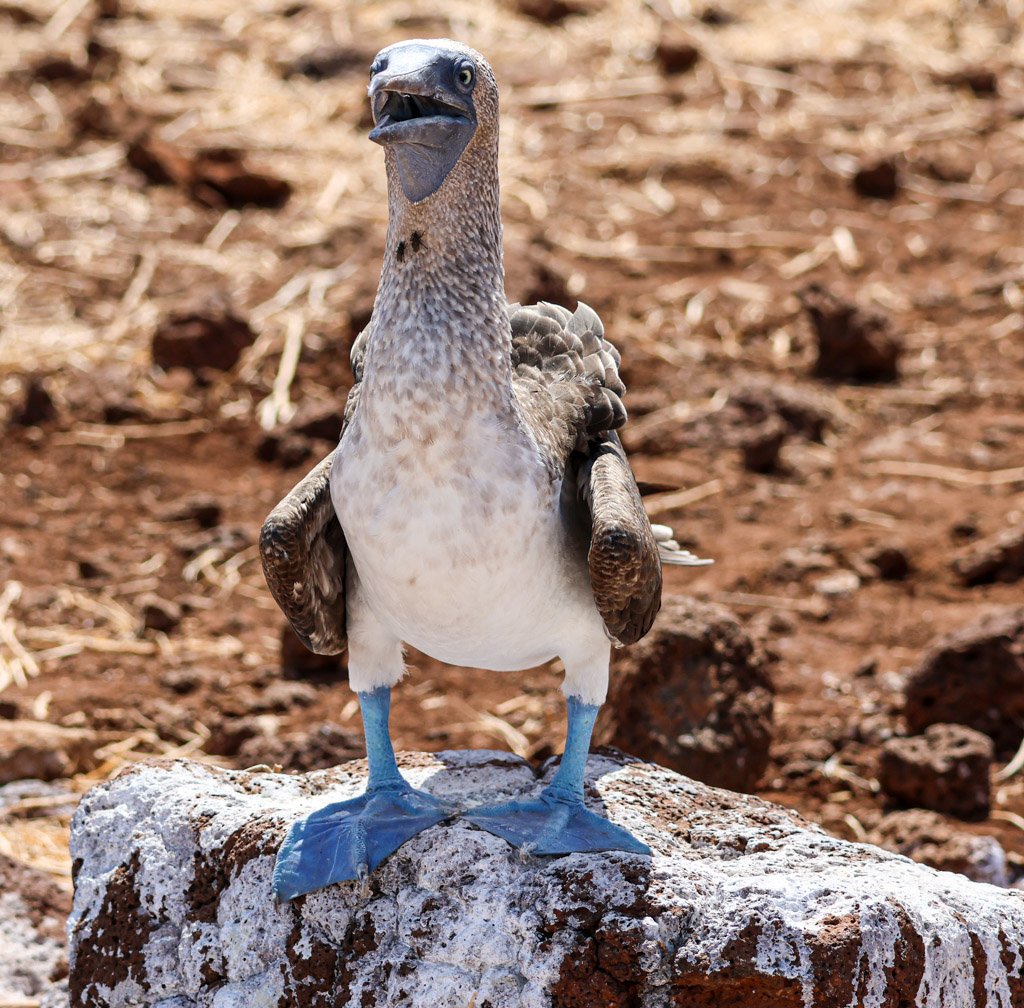
Blue-footed Booby Clumsy on land, but in the air, they dive like missiles—hitting the ocean at speed to catch fish. The courtship display itself: the male lifts each blue foot in an exaggerated high-stepping walk while spreading his wings and pointing his bill skyward. It's theatrical, but every element is information the female is reading in real time.
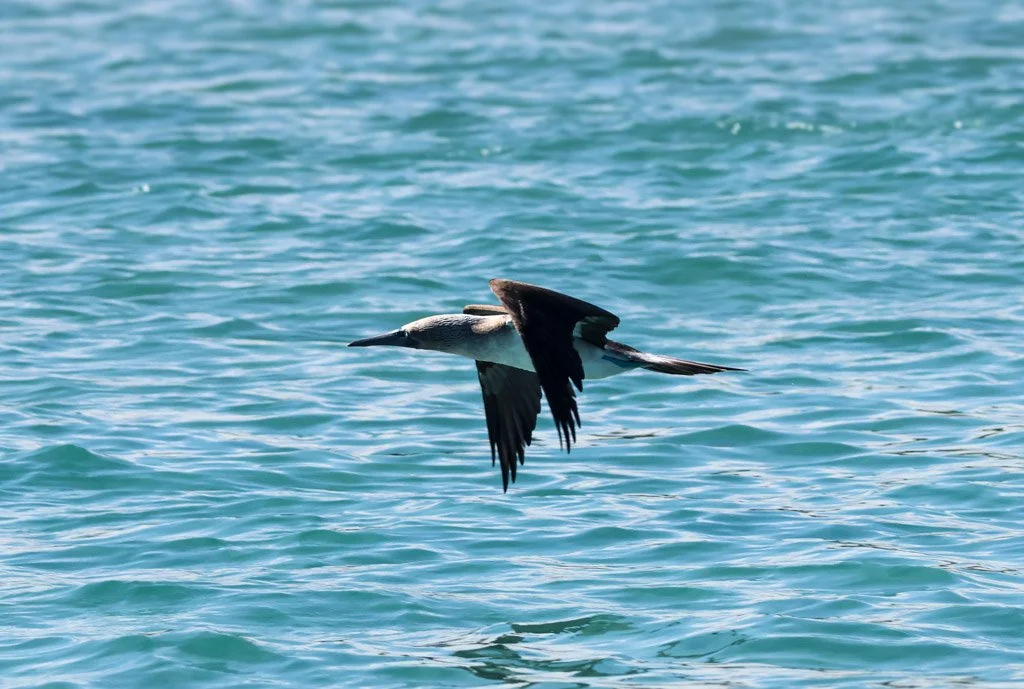
Blue-footed Booby High-velocity plunge diver—enters water at ~80 km/h with streamlined body and wings tucked to reduce impact and drag.
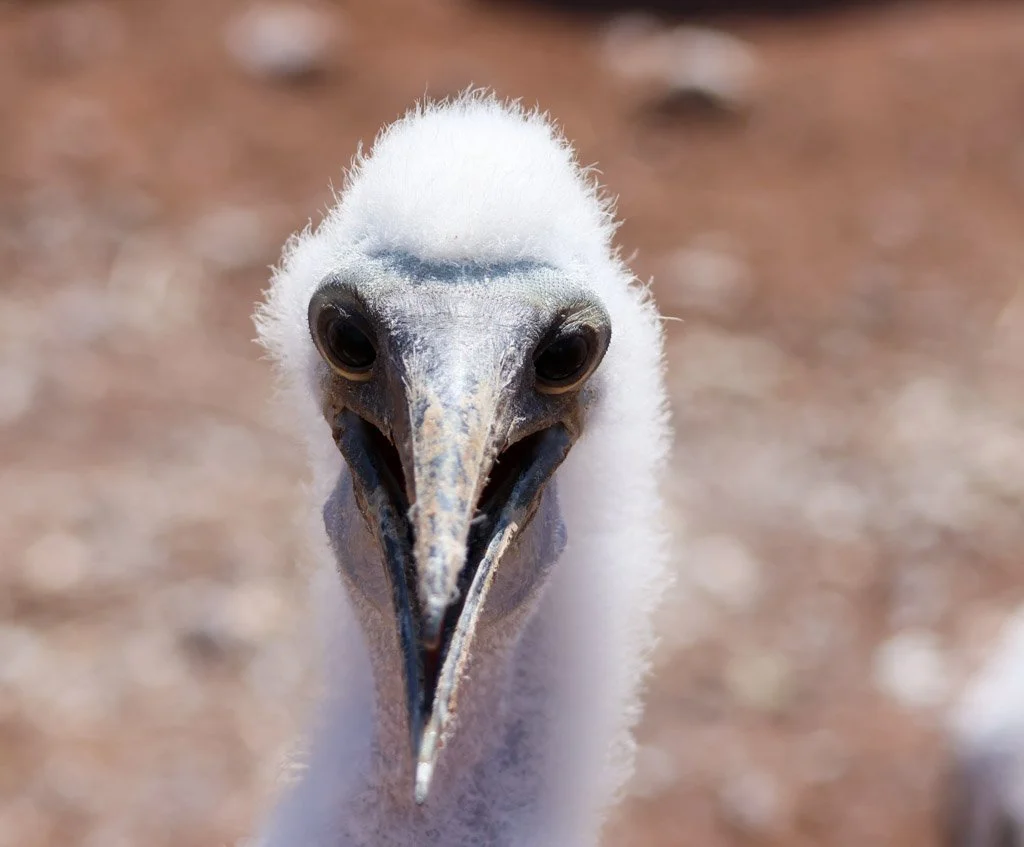
Blue-footed Booby (chick) Completely dependent at first—yet from this fragile start comes one of the ocean’s most precise hunters. A large chick still in full white down is in the most energetically expensive phase of its existence — it cannot thermoregulate independently and still requires parental brooding at night or in direct sun, yet it's consuming fish at peak rate.
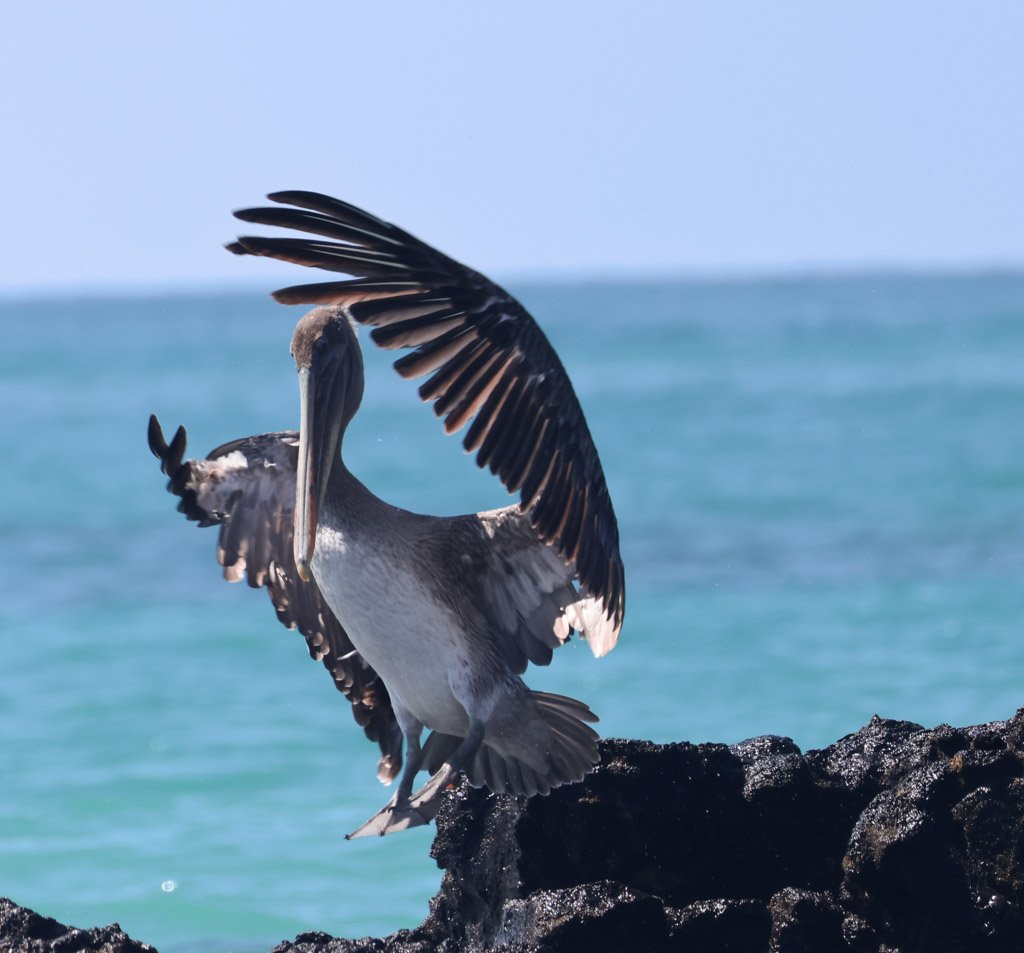
Brown Pelican They plunge headfirst from the air, using built-in air sacs to survive the impact. The skin of the underwing and axillary region is highly vascularised, and by lifting and curving the wings, the bird exposes that surface to airflow to dump excess body heat.
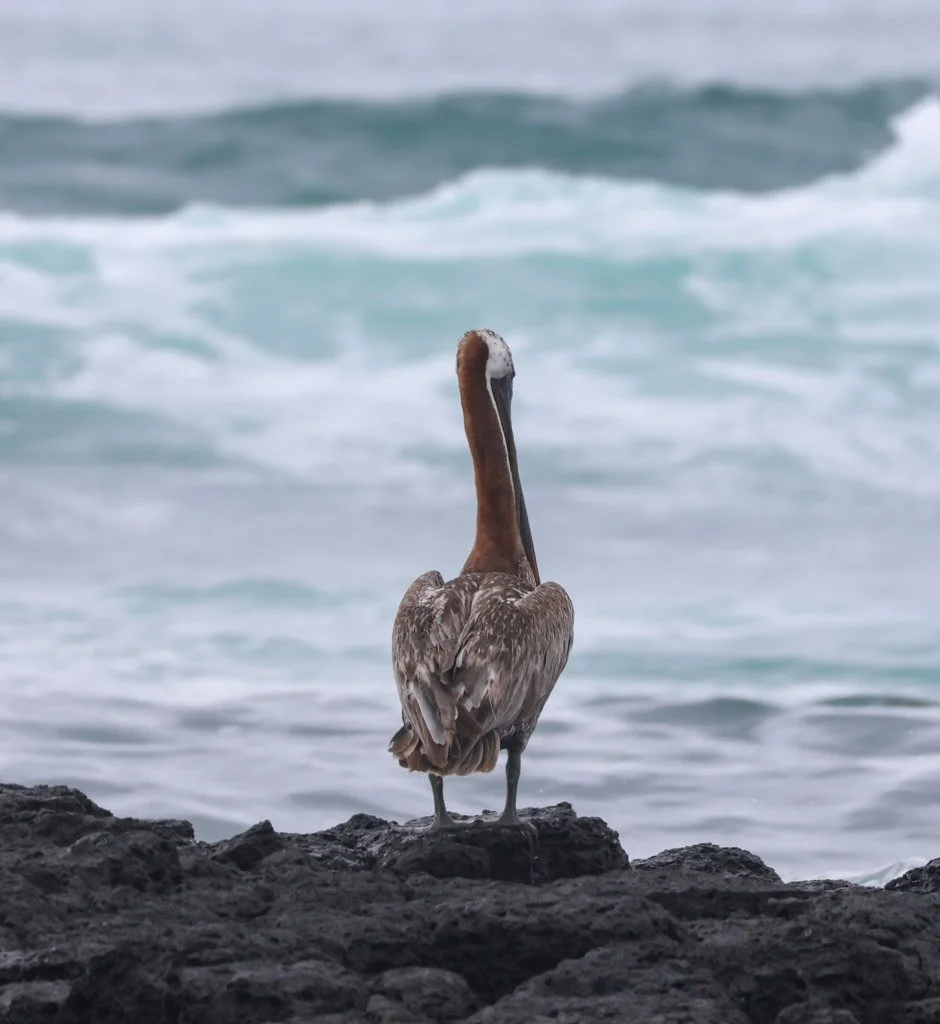
Brown Pelican Patience pays—they can sit motionless for long periods, waiting for the perfect moment to strike.
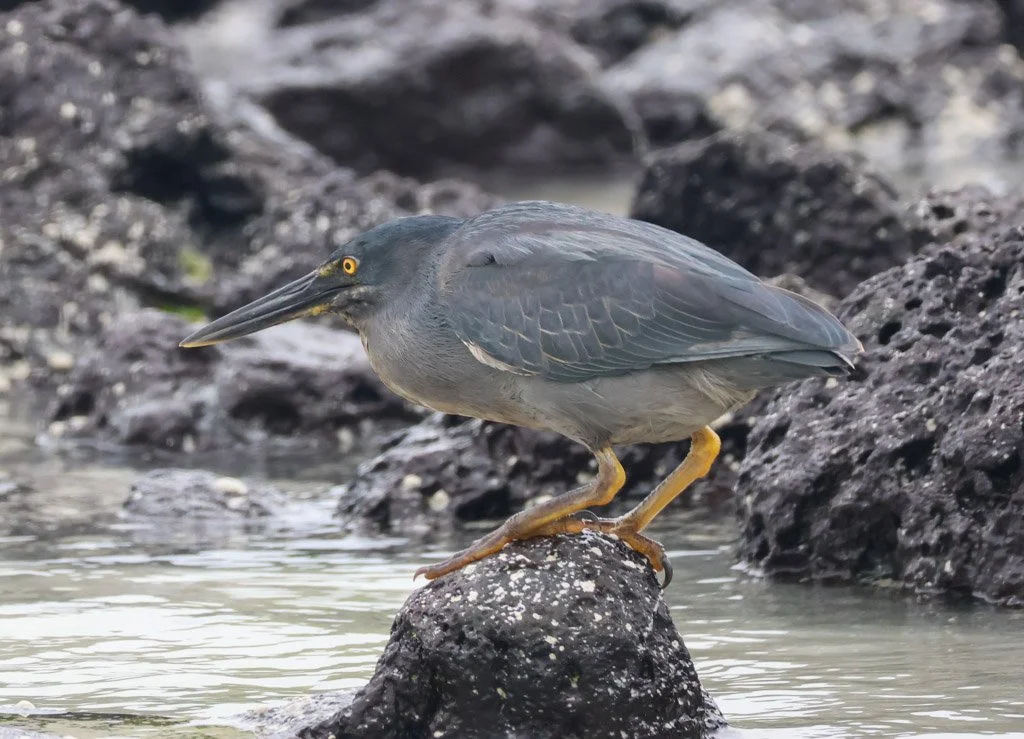
Lava Heron (Striated Heron – Galápagos) A master of ambush—standing still for minutes before striking with lightning speed hitting with a strike measured at under 100 milliseconds. It doesn't chase. It waits and calculates.
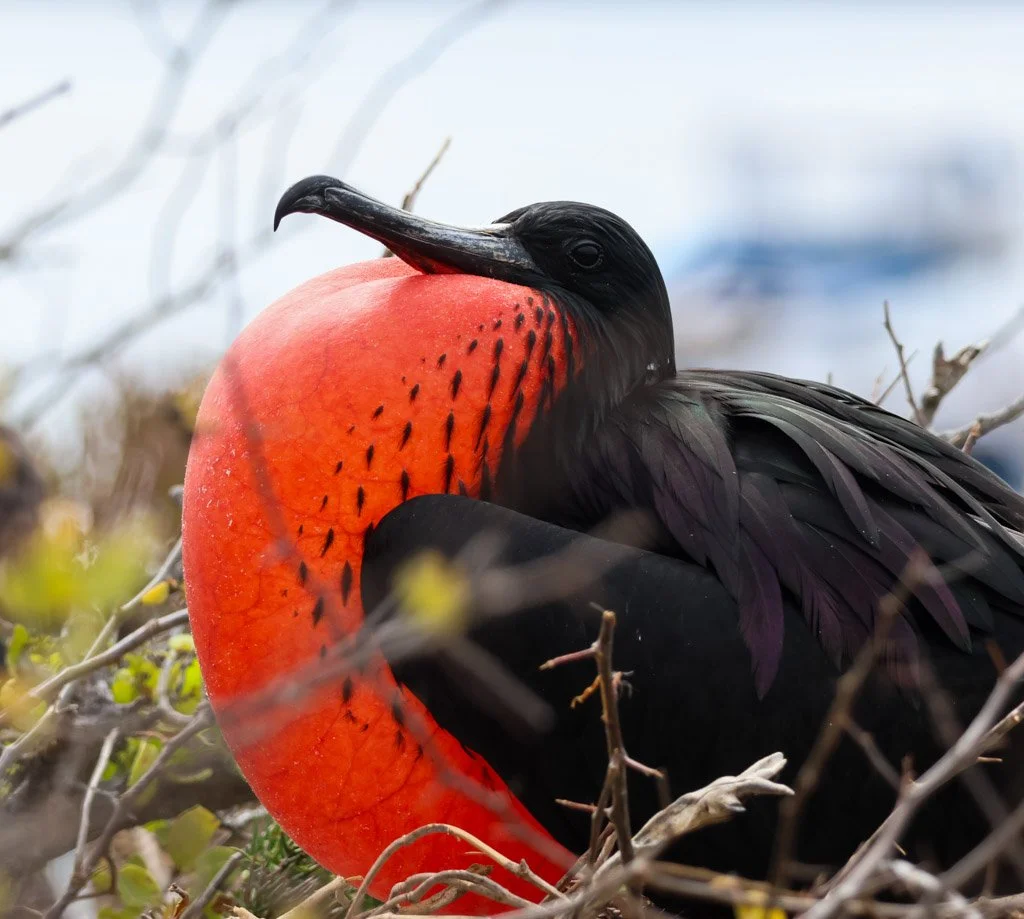
Magnificent Frigatebird (male) That inflated red pouch is pure theatre—used to attract a mate, but only if she’s impressed. That Pouch Takes 20 Minutes to Inflate — and Up to Two Months to Deflate
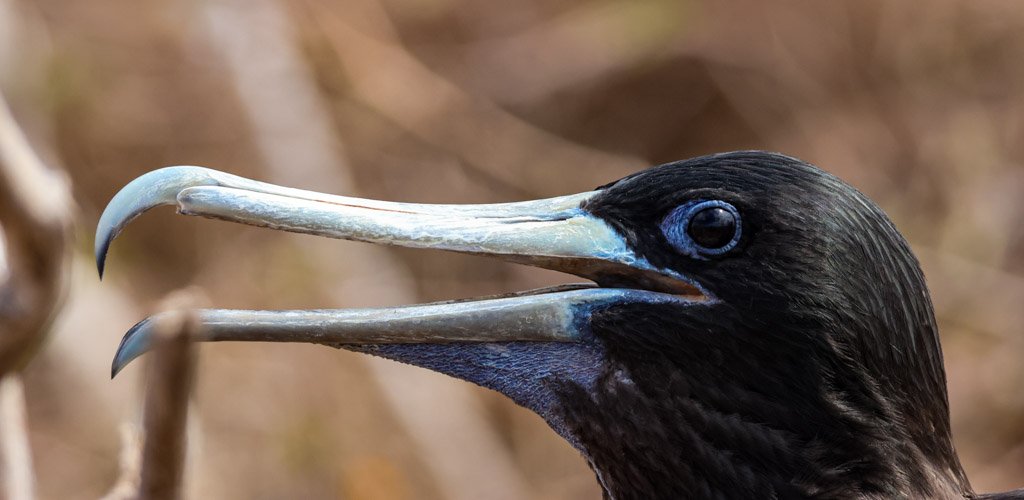
Magnificent Frigatebird (female), s visually the inverse of the male — largely black with a distinctive white breast patch and a blue orbital eye ring absent in the male. She is also larger than the male, which is unusual in raptorial birds and reflects the energetic demands of egg incubation and extended chick rearing she carries disproportionately.
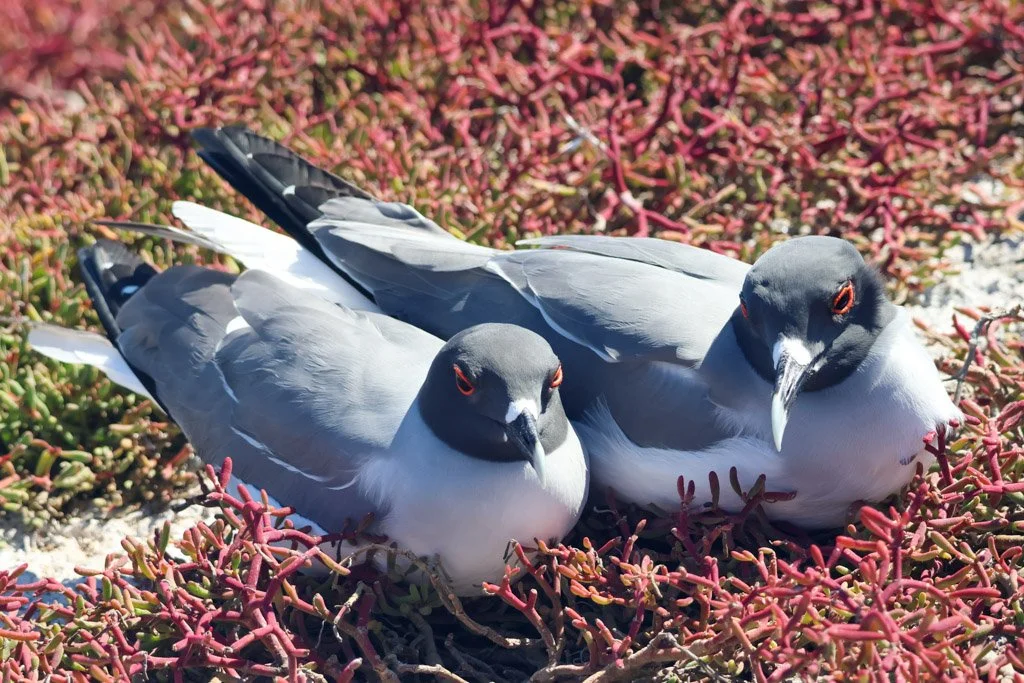
Swallow-tailed Gulls Daylight rest for night hunters—their lives unfold in darkness, feeding when most of the ocean sleeps. The large, dark-adapted eyes and the distinctive red orbital ring are functional adaptations to low-light hunting, not ornamentation. It pursues squid and fish that vertically migrate to the surface after dark,
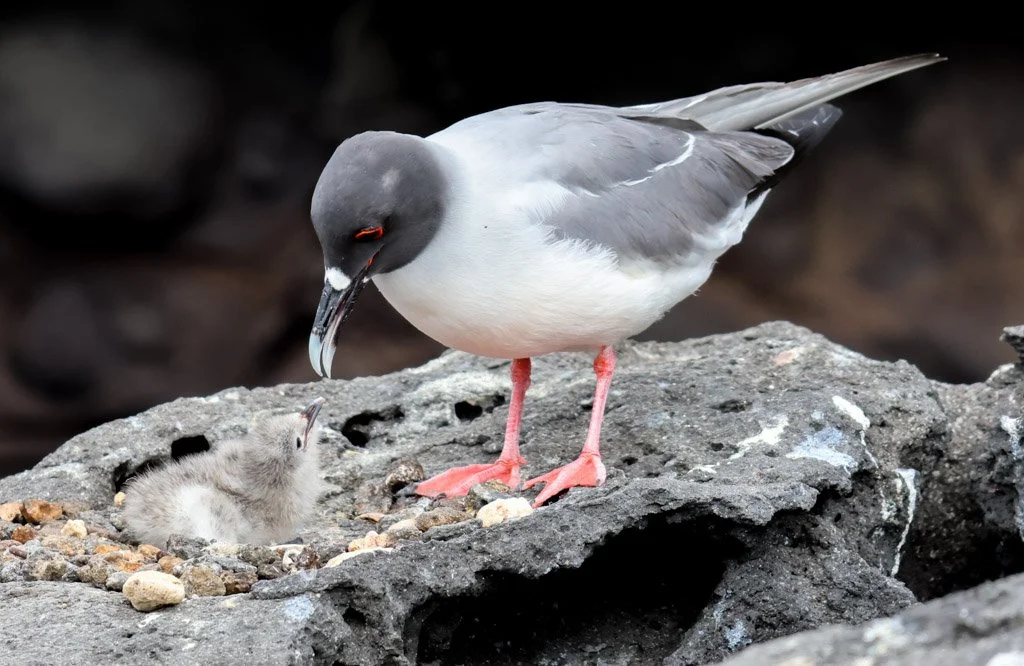
Swallow-tailed Gull A rare sight—parent and chick together, raised on a life timed to the rhythms of the night. The adults feed entirely at night far offshore. The chick cannot follow. So the parents must make round trips in darkness, navigating back to a specific rock ledge on a specific island, locate their own chick among a colony, and regurgitate squid and fish in the dark. .
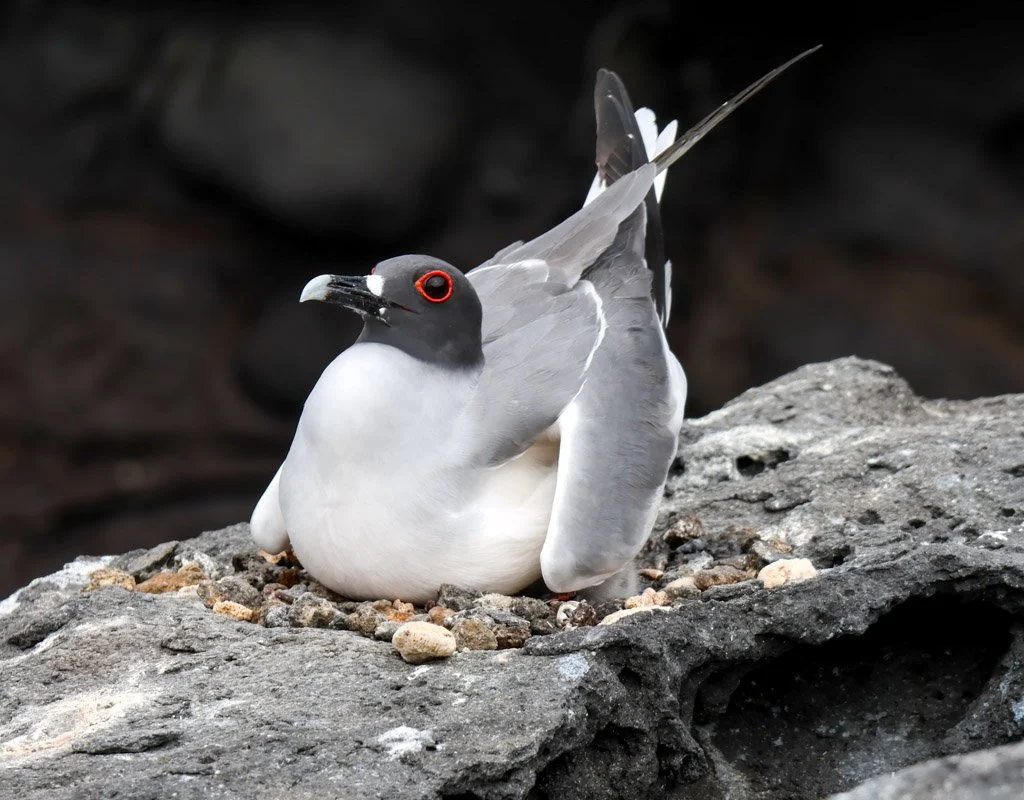
Swallow-tailed Gull The chick is hidden beneath. The vulnerability this creates: the chick is entirely dependent on two specific adults making successful nocturnal foraging runs in increasingly unpredictable waters. If one parent is lost — longline bycatch, exhaustion, storm — the single remaining parent typically cannot provision the chick alone at sufficient rate.
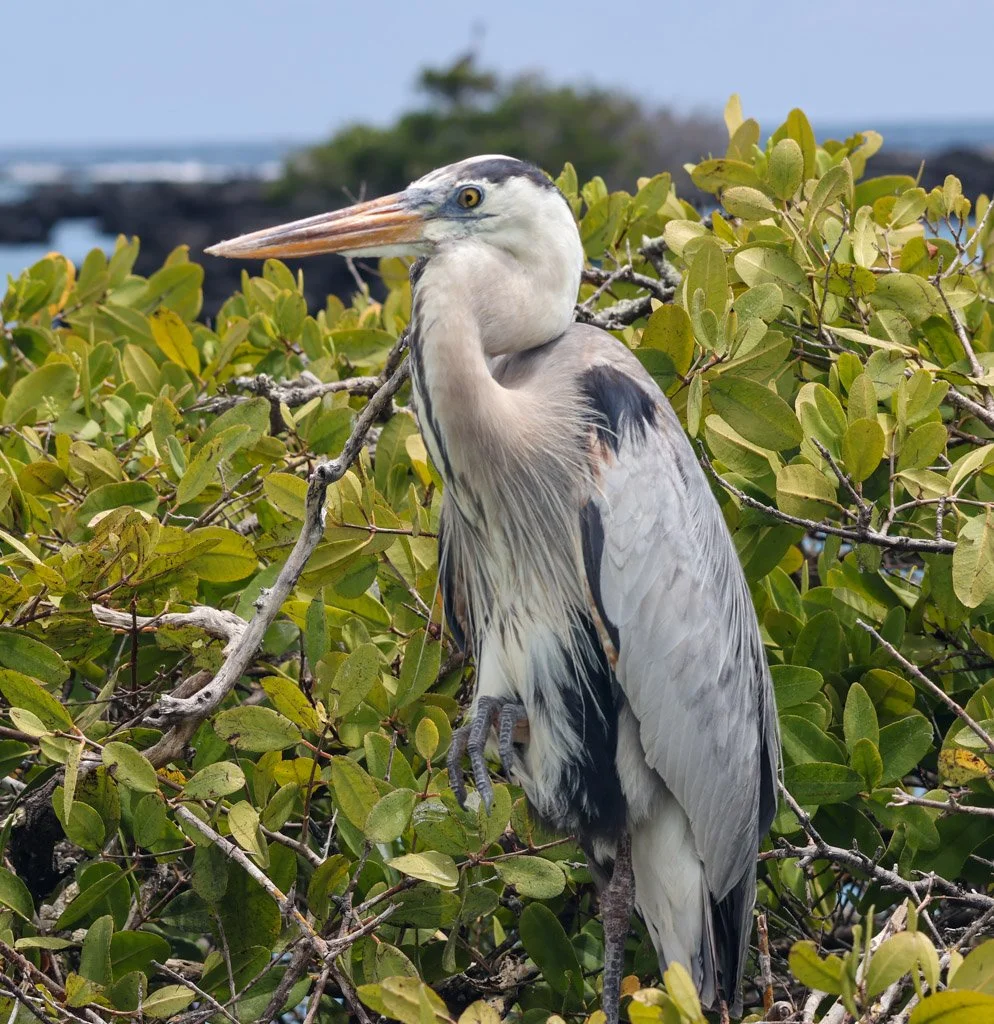
Great Blue Heron (Galápagos) is essentially the same bird you'd find across North and Central America. What makes Galápagos individuals distinct in behaviour: the near-complete absence of fear. Mainland Great Blues are notoriously skittish — flushing at 30–40 metres from a human. Galápagos birds routinely allow approach to a few metres. This is the island tameness effect
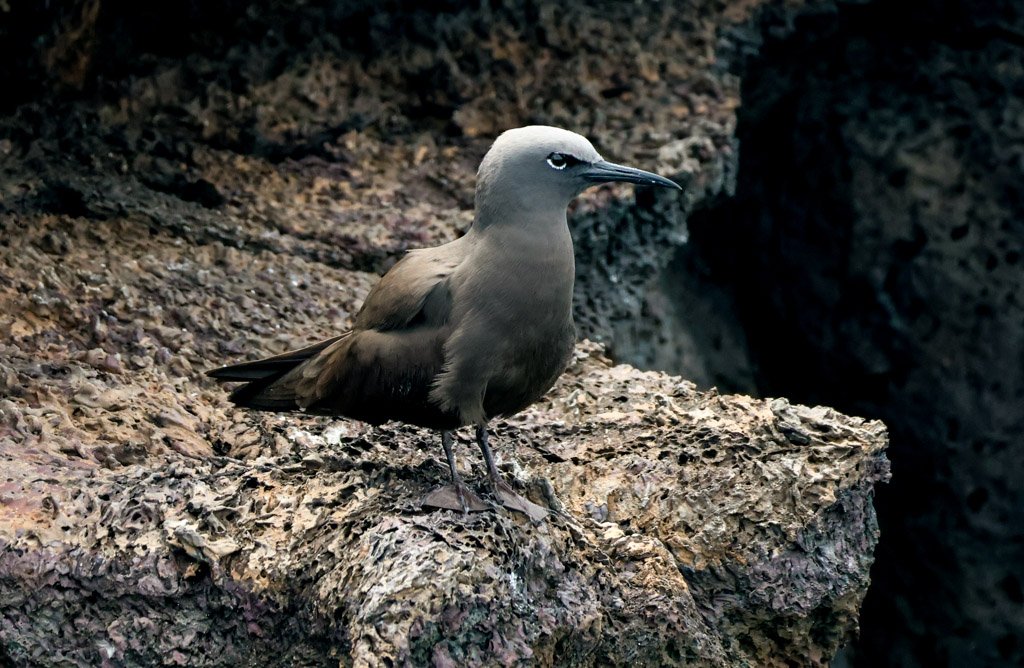
Brown Noddy Nesting on the rim of an active volcano is not a common composition anywhere in the world. What you have is a bird whose entire existence is ocean-dependent — it feeds by skimming the surface, rarely lands except to nest — perched on the edge of one of the most geologically active surfaces on the planet. The visual contradiction alone makes it a standout conservation image.
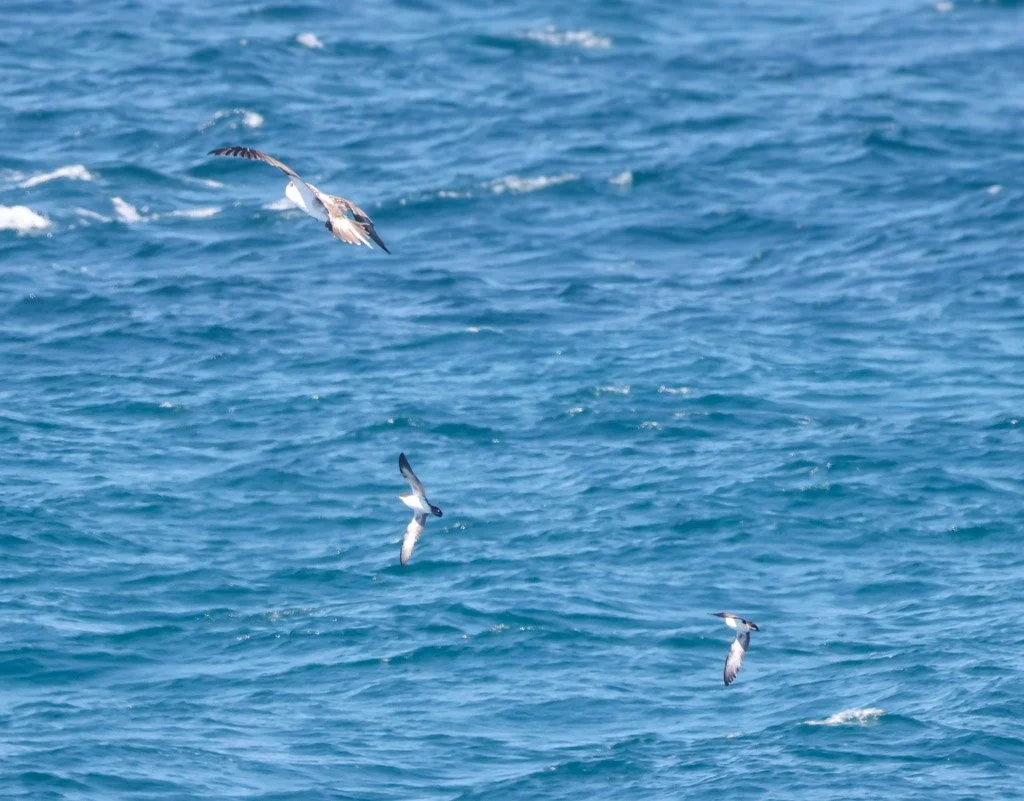
Galápagos shearwater spends the majority of its life at sea, never touching land except to nest. It is tube-nosed — the distinctive nostril tubes on the bill serve a dual function: enhanced olfactory detection of prey and fish-scented feeding aggregations across vast ocean distances, and salt excretion from ingested seawater, analogous to the pelican's nasal gland system.
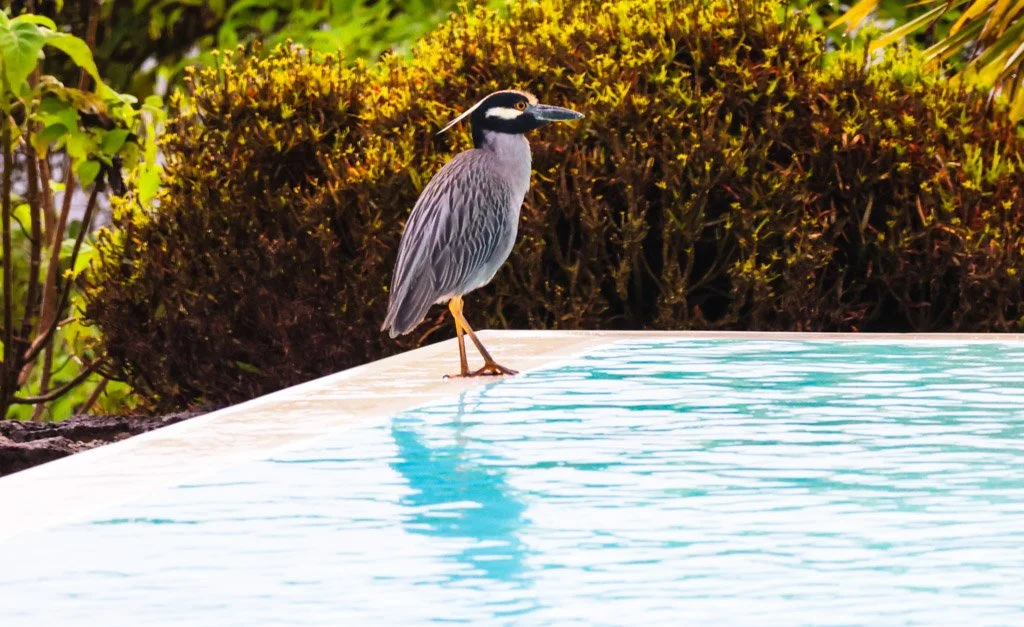
Yellow-crowned Night Heron has a bill architecture specifically evolved to crack crab and crustacean exoskeletons — heavier and more robust than a typical heron bill. A hotel pool in the Galápagos almost certainly has small crabs, invertebrates, or fish using the water's edge or drainage areas. The bird was not lost or confused — it was systematically hunting a resource, and a still, shallow, human-built water body is functionally identical to a rock pool from a foraging perspective.
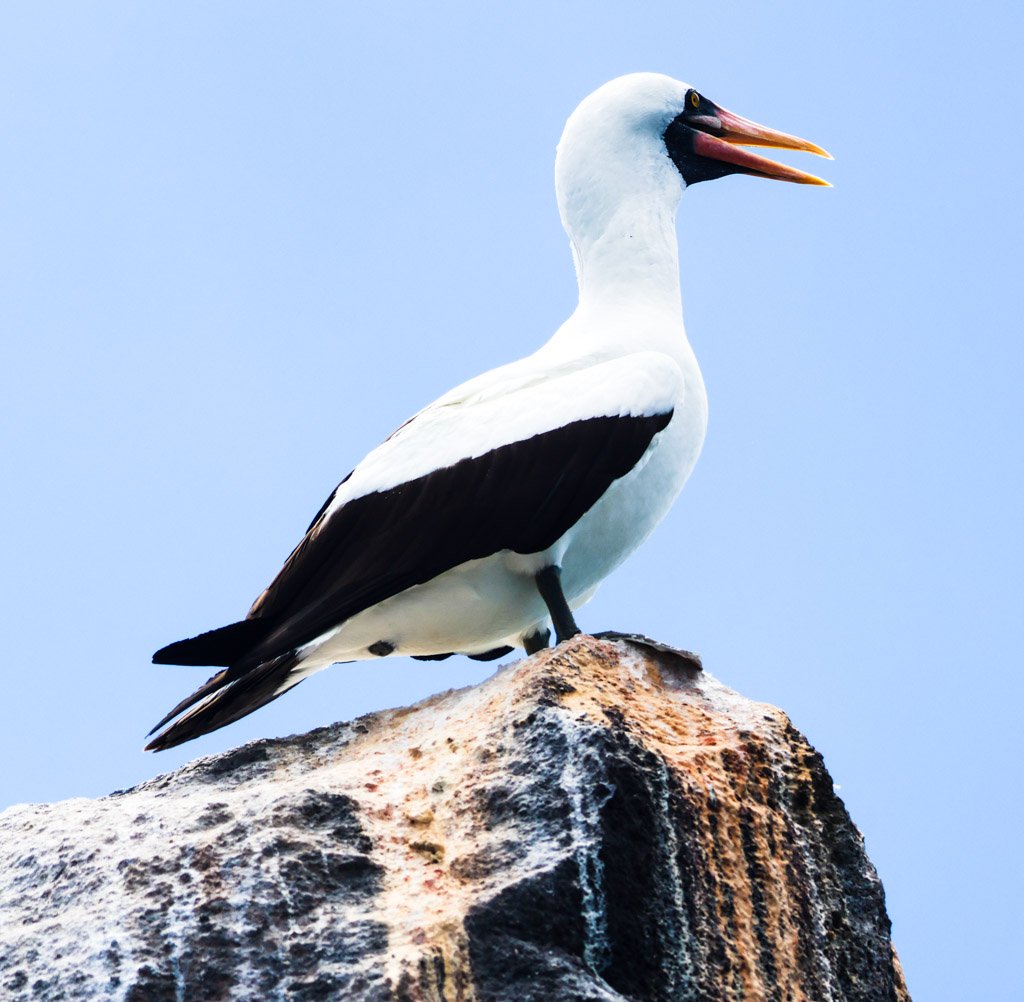
Nazca Booby Specialised plunge-diver—streamlined body, air-sac cushioning and forward-set eyes enable high-velocity, precision strikes on pelagic fish; highly sensitive to shifts in ocean productivity (e.g. El Niño), making it an effective indicator species for marine ecosystem health. Was only formally separated from the Masked Booby as a distinct species in 2002. Visually striking — white plumage, black mask, orange-yellow bill, black wingtips — but the biology underneath is considerably darker than the appearance suggests.
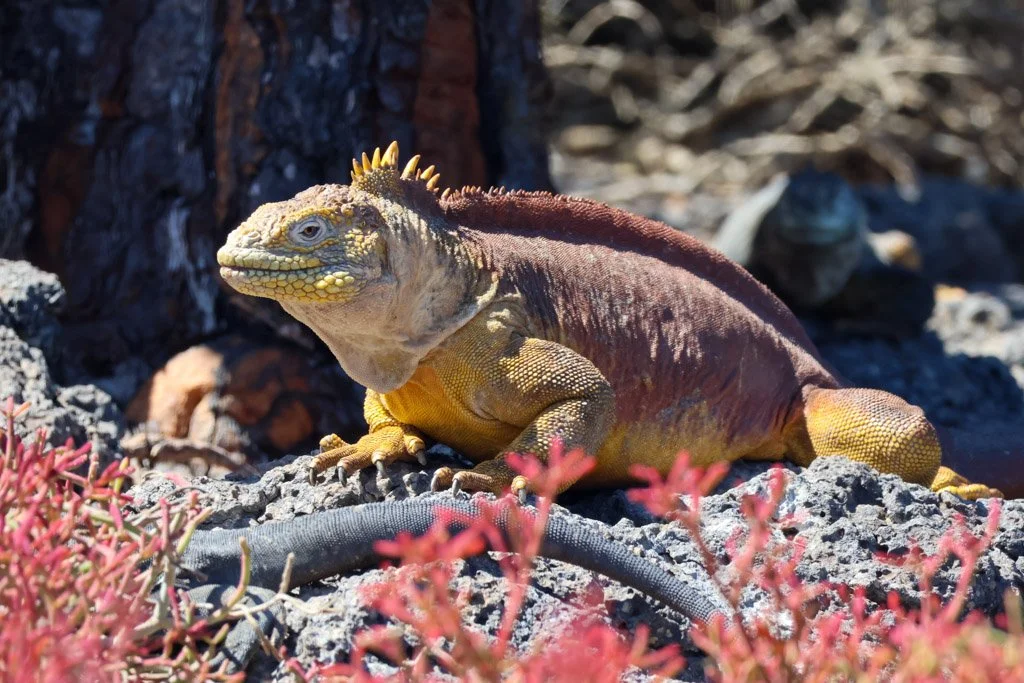
Galápagos Land Iguana s one of the more ecologically sophisticated reptiles in the archipelago. They consume fallen cactus pads and fruit, tolerating the spines, and in doing so disperse seeds across territories that can span several kilometres. A single large male land iguana is a keystone seed disperser for the plant community of its entire home range.
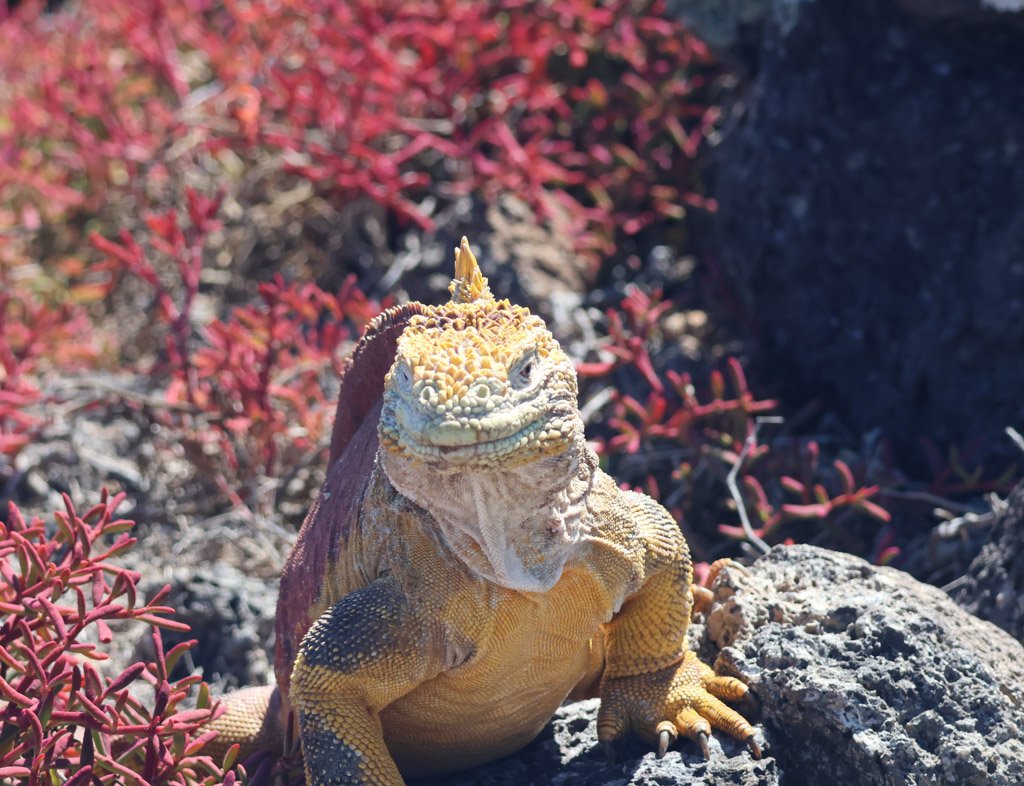
Land Iguana The thermoregulation behaviour is precision engineering, land iguanas have been documented making altitudinal migrations — moving upslope in cool morning hours to warm basking zones, then descending to shade as temperature peaks, then ascending again. They are actively managing core body temperature.
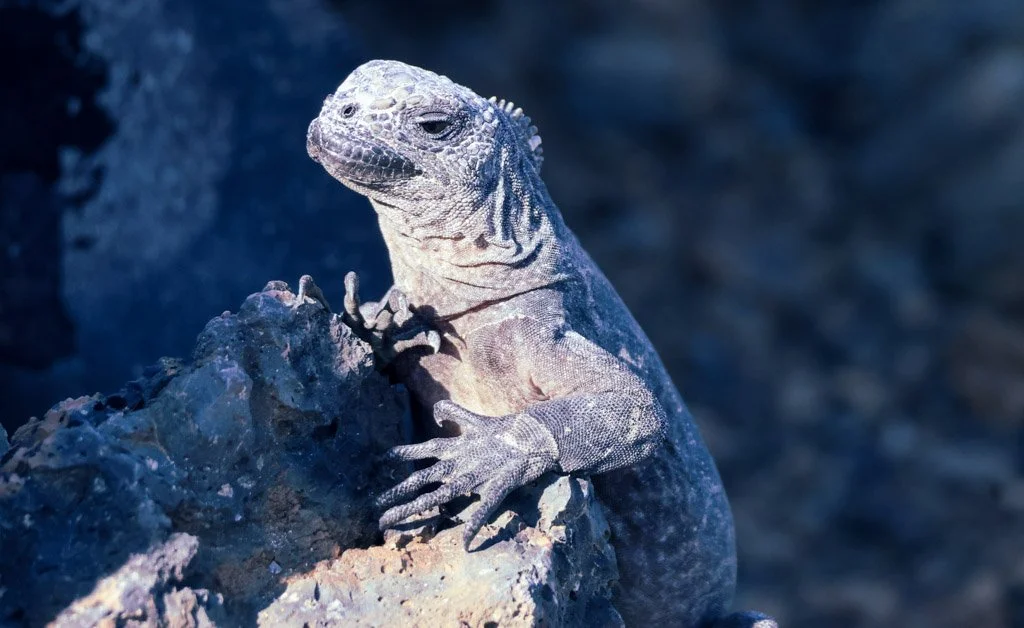
Galápagos Marine Iguana Once pushed to the brink by introduced species—now recovering through careful conservation and protection.
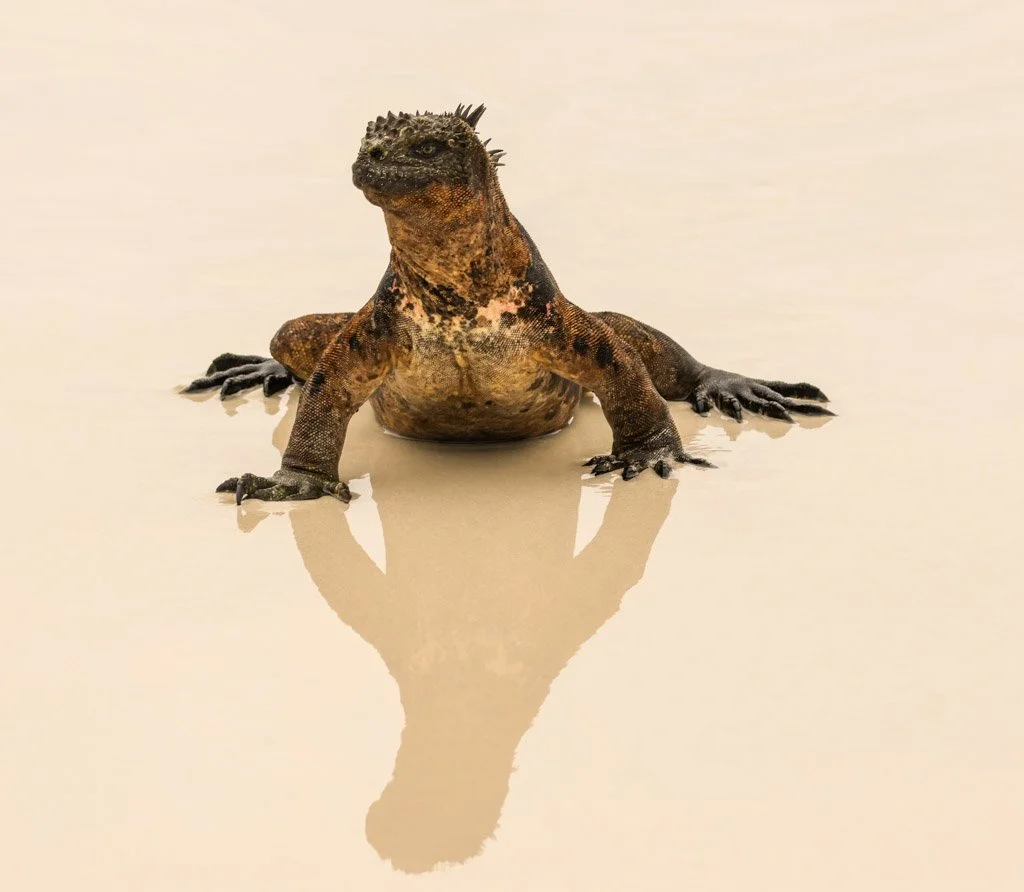
Marine Iguana The only sea-going lizard—evolved to feed underwater, yet highly vulnerable to warming oceans. Forages in the ocean, diving up to 12 metres to graze on subtidal algae.
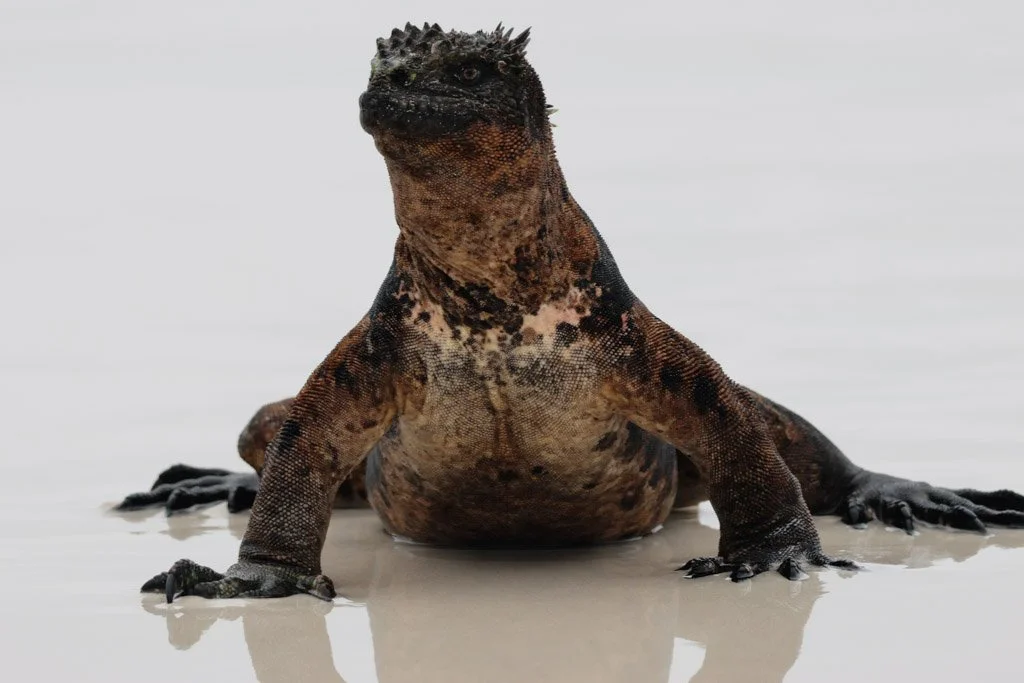
Marine Iguana Salt glands let them expel seawater—often seen “sneezing” salt after feeding. It is actually the nasal salt gland in active excretion — a specialised structure above the nasal passage that extracts sodium chloride from the bloodstream and expels it as a concentrated brine mist.
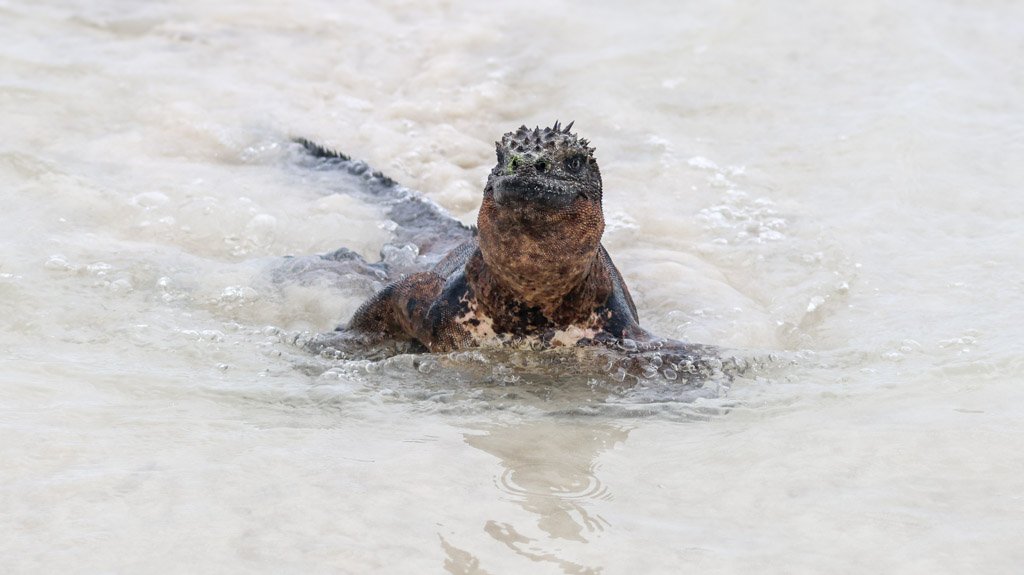
Marine Iguana. The most remarkable biological fact is this: during El Niño when warm water kills the algae, marine iguanas shrink their own skeletons — not just losing mass, but reabsorbing bone to reduce their body length by up to 20%. When food returns, they regrow. No other vertebrate does this. It is reversible skeletal reduction as a starvation survival mechanism.
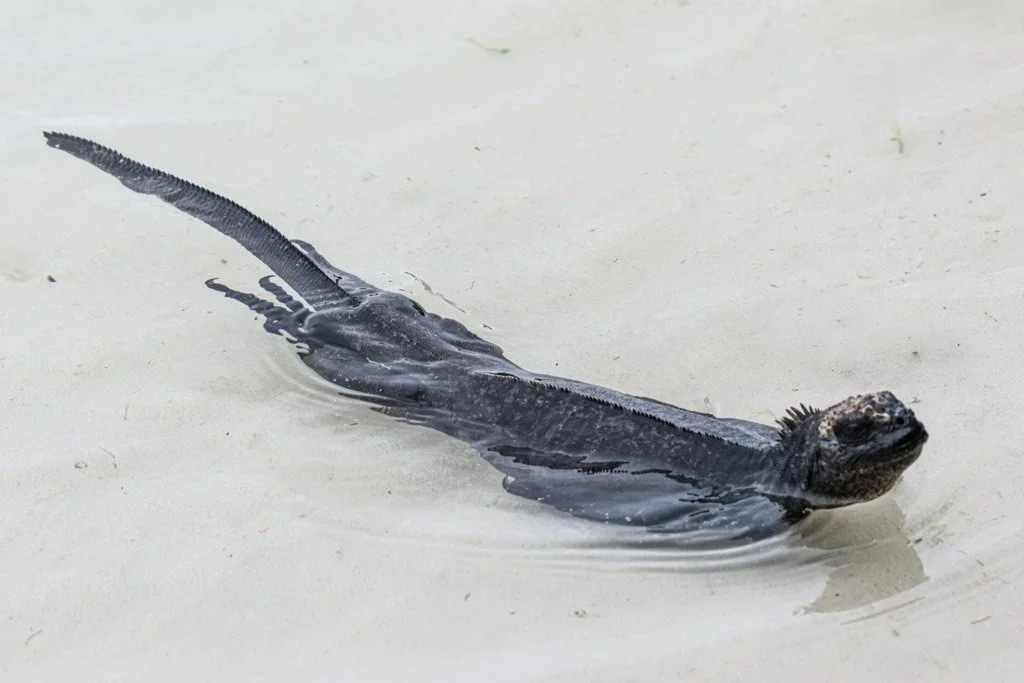
Marine Iguana Laterally compressed tail provides propulsion—efficient swimmer adapted for shallow coastal feeding.
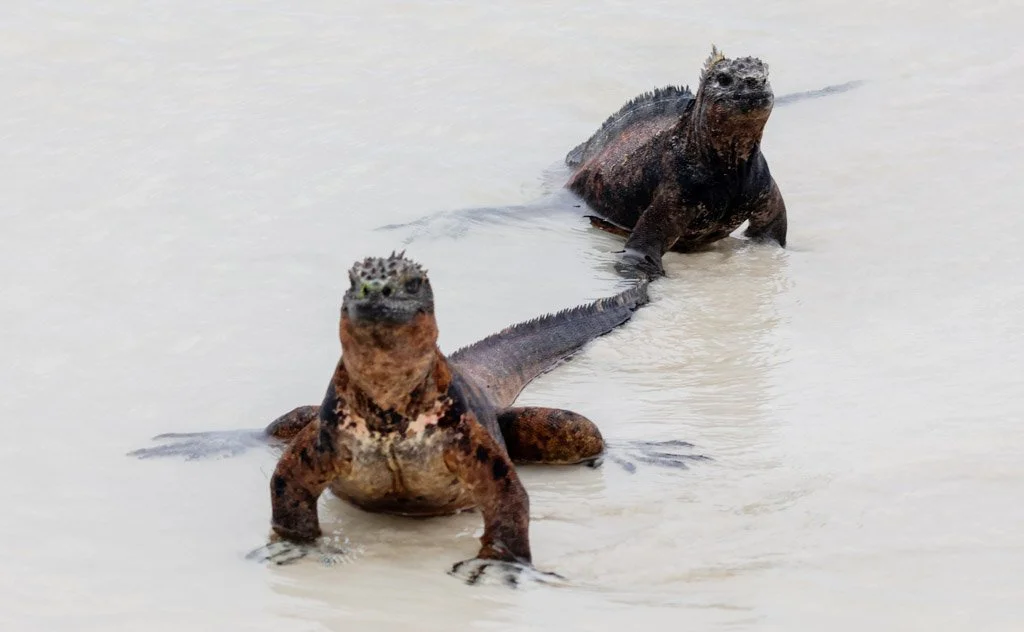
Marine Iguanas/ The colour variation is island-specific: the all-black populations on Fernandina and Isabela differ visibly from the red-and-black males on Española during breeding season — each island population has diverged sufficiently that subspecies designations exist across the archipelago. Same species, different islands, visibly different animals.
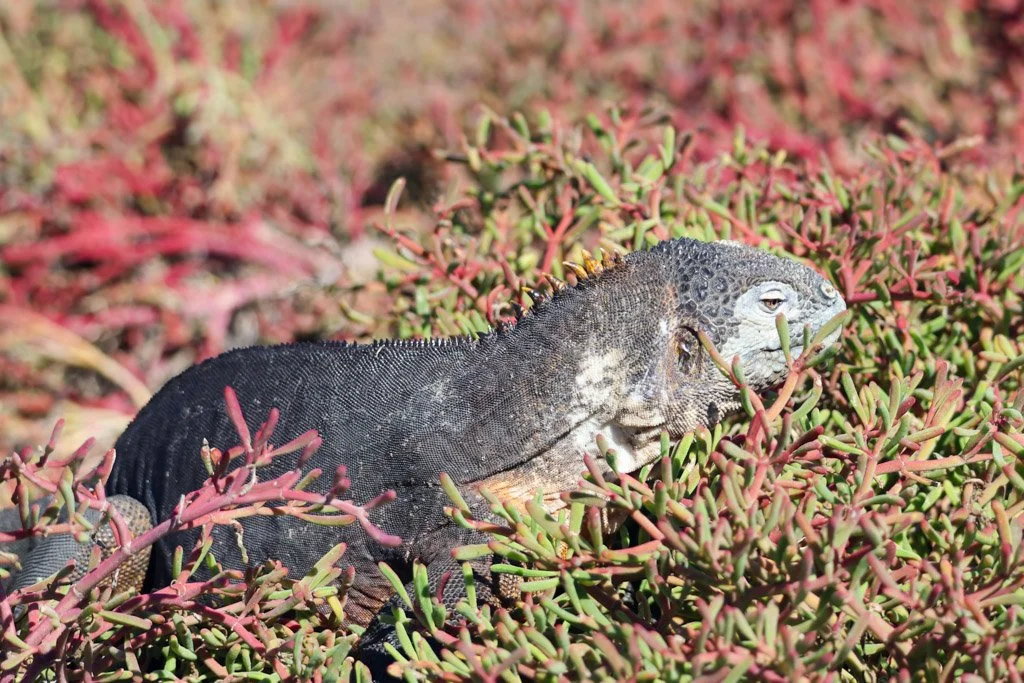
Marine Iguana Dark skin absorbs heat quickly—essential for recovering after feeding in cold ocean waters.
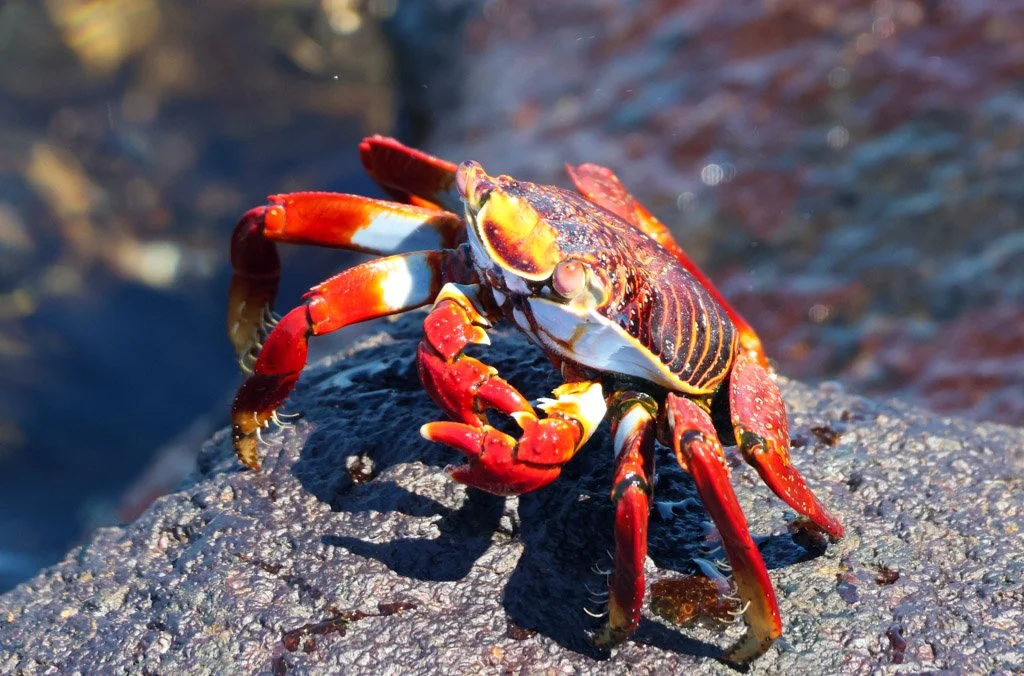
Sally Lightfoot Crab.they transition through mottled brown to the explosive red, orange, blue, and yellow adult colouration. That adult colour is a direct predation risk. The fact that evolution has maintained it means the benefits outweigh the cost, though the precise driver — mate selection, species recognition, aposematism — is still debated.
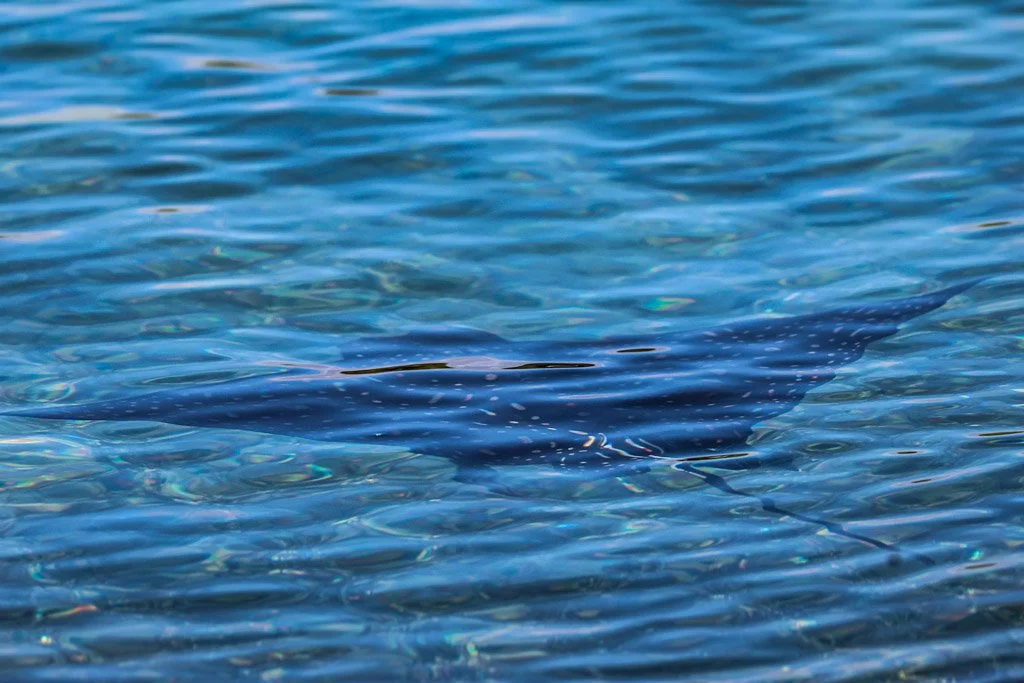
Spotted Eagle Ray moves through water using its expanded pectoral fins as wings, generating lift and thrust through the same principles as a bird in flight — not undulating like a stingray, not propelling with a tail. Watching one in open water is genuinely aerodynamic in character. The wingspan can reach 3 metres across.
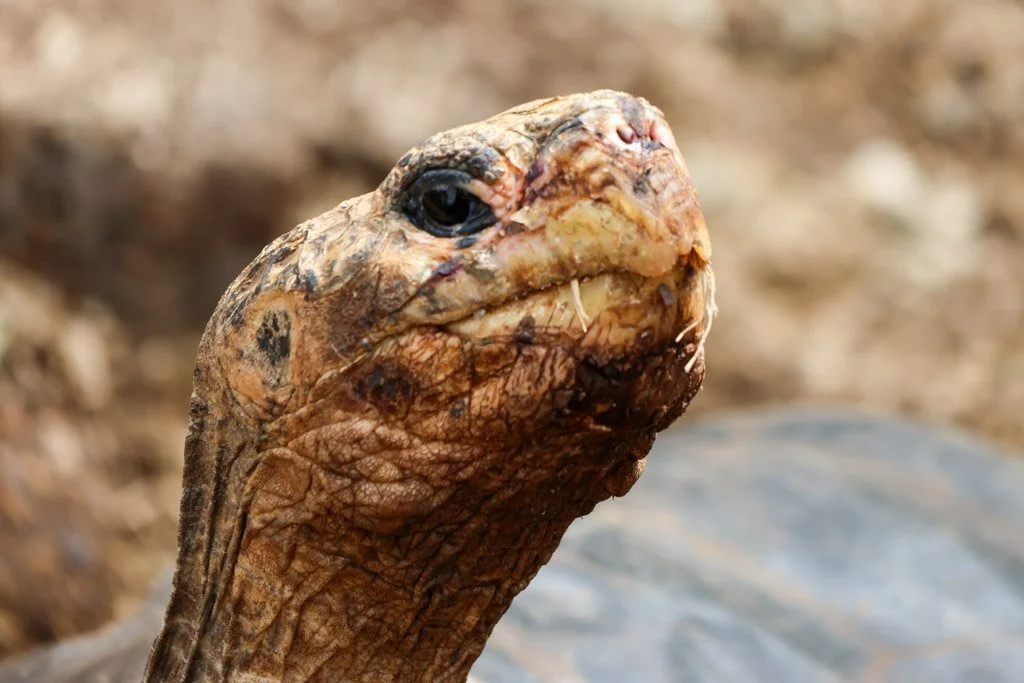
Galápagos Giant Tortoise, up to 13 distinct species across the archipelago, several now extinct — are not passive inhabitants of the Galápagos. A large adult tortoise weighing 200–400kg moving daily through vegetation is ploughing trails, compressing soil, distributing seeds, and grazing vegetation to ground level.
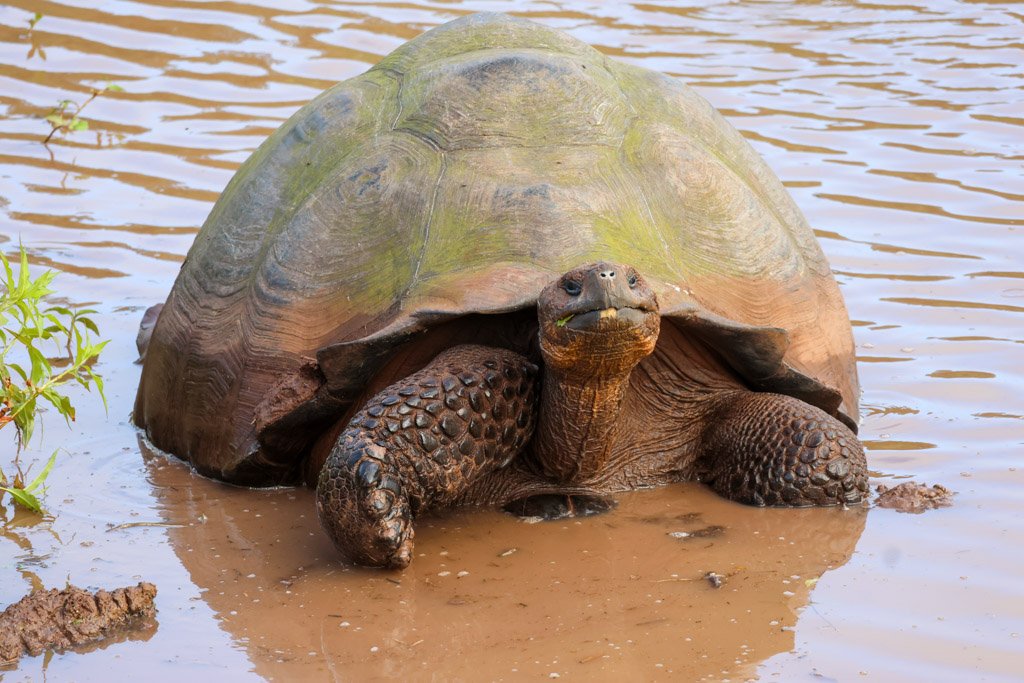
Galápagos Giant Tortoise. The tortoise trails that criss-cross highland zones on Santa Cruz and Isabela are not incidental paths, they are engineered corridors used by dozens of other species. Remove the tortoise, the vegetation structure of the highland zones changes fundamentally.
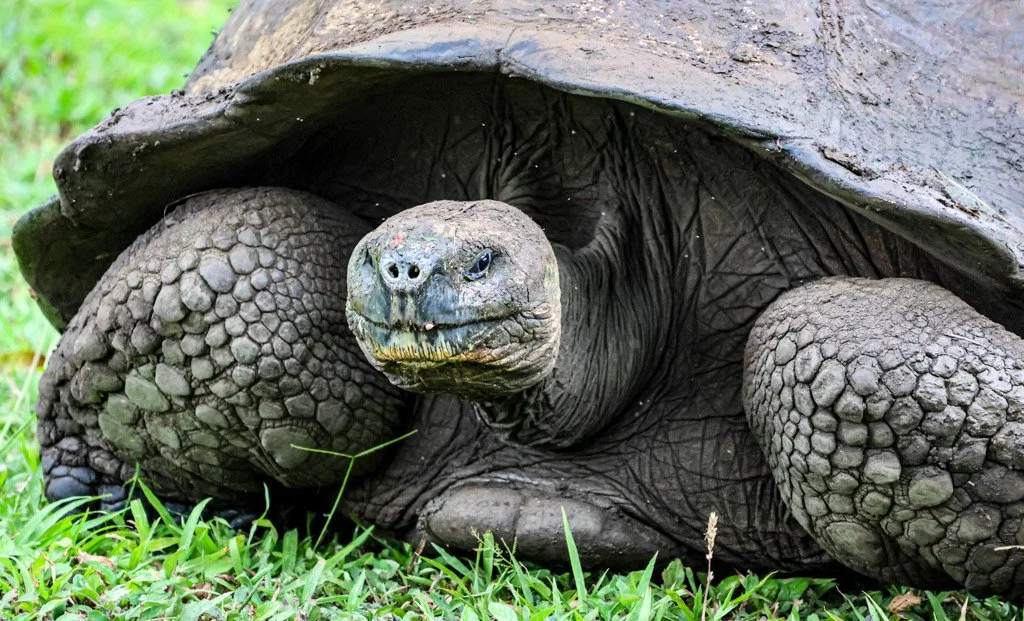
Galápagos Giant Tortoise. The longevity makes the conservation mathematics brutal: tortoises live 150+ years but reach sexual maturity slowly — females don't breed productively until around 20–25 years. A population that was decimated in the 18th and 19th century — who took an estimated 100,000–200,000 tortoises as living food stores on ships — is still recovering.
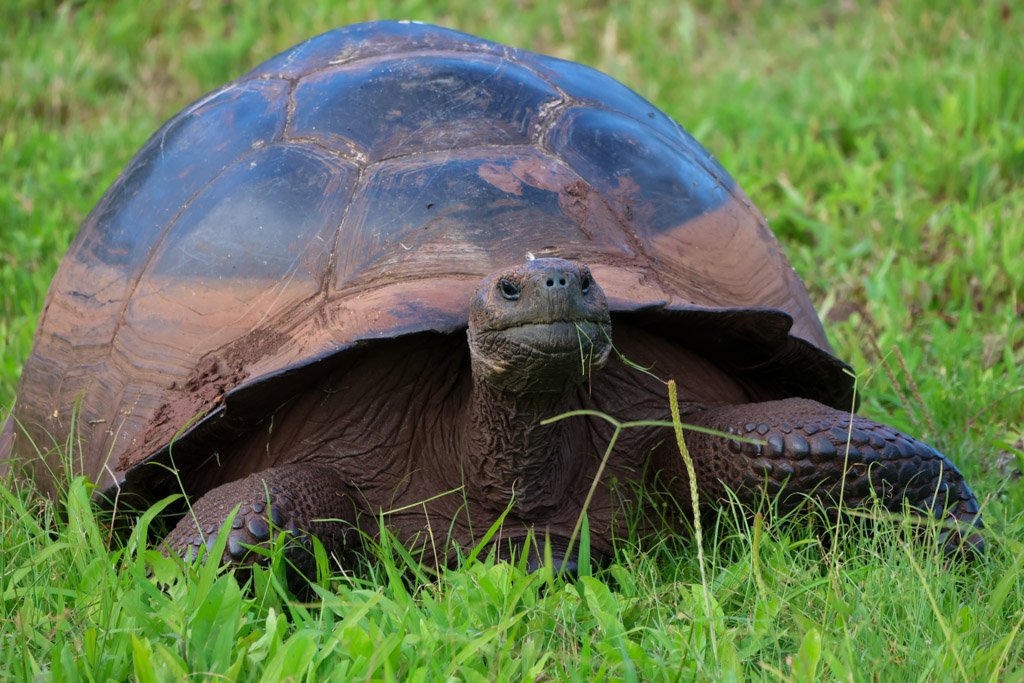
Galápagos Giant Tortoise. The animals alive today are in many cases the direct descendants of a catastrophically small founder population post-exploitation. The genetic bottleneck is measurable. Lonesome George is the defining conservation symbol: the last Pinta Island tortoise, died June 2012 without producing viable offspring despite decades of breeding attempts.
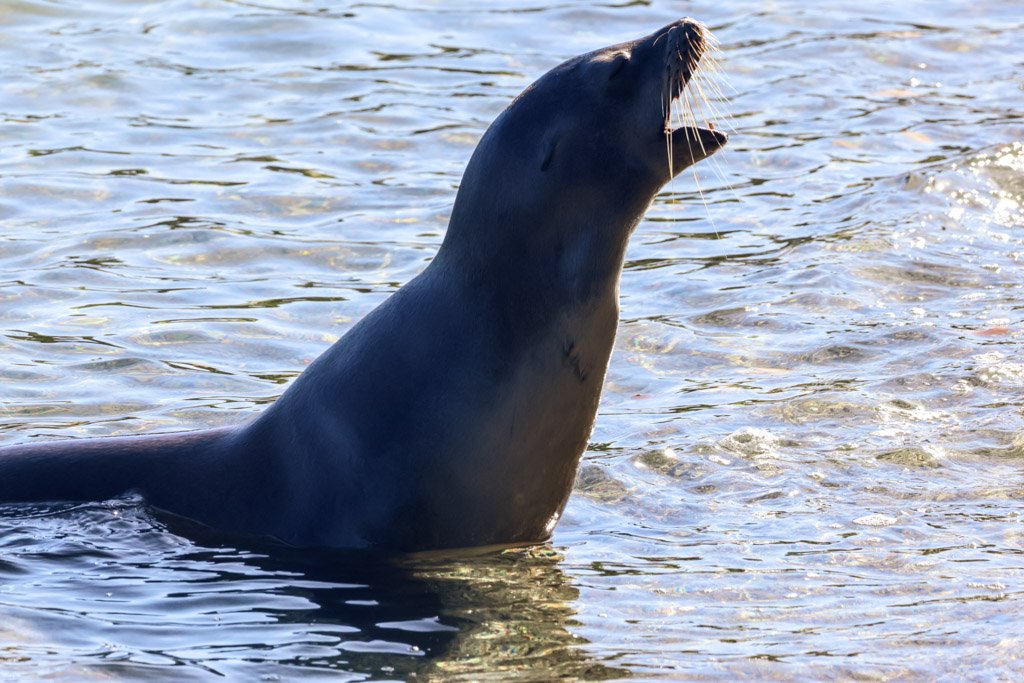
Galápagos Sea Lion. Endangered, endemic to the Galápagos with a total population of approximately 50,000 animals, down from historical estimates El Niño events are the primary mortality drive. The 1997–98 event killed an estimated 50% of pups through maternal starvation and abandonment when fish disappeared
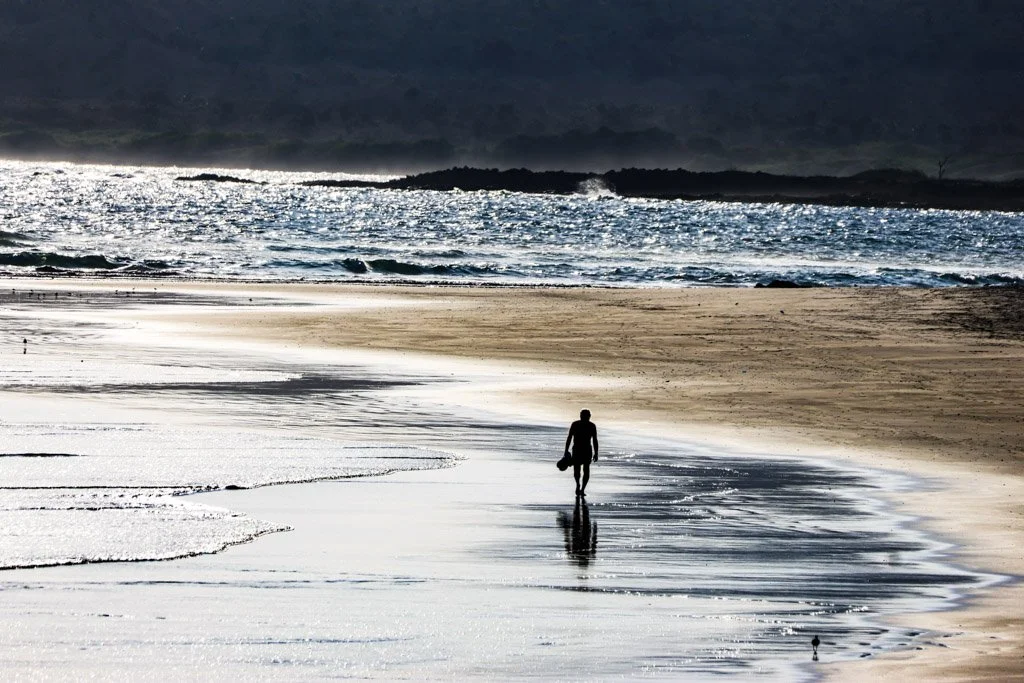
Remote shorelines like this are only possible because access is controlled and ecosystems are protected from development and overuse. No development on the horizon, no artificial light, no infrastructure — is a conservation achievement, not a default condition. The Galápagos National Park covers 97% of the land area of the archipelago.